Closed claims can open new doors
Panel reviews recent findings from the ASA Closed Claims Project and reveals lessons learned.
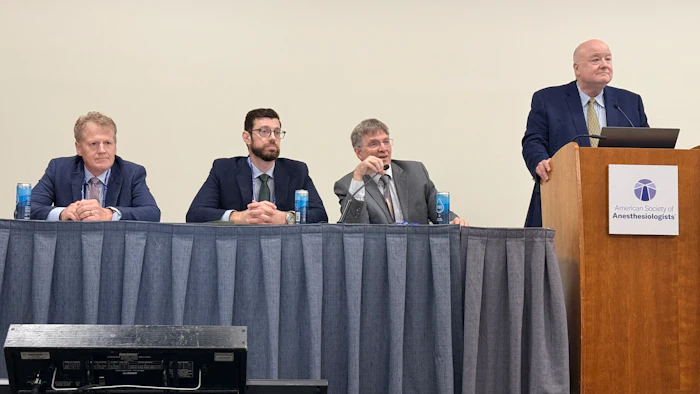
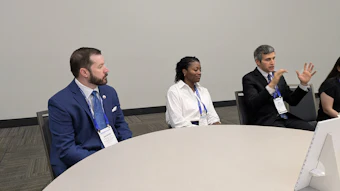
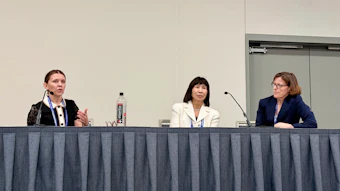
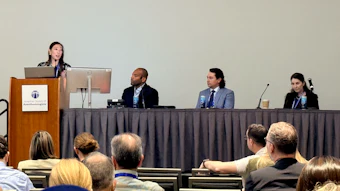
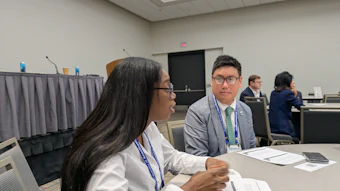
Attendees were treated to an interesting and insightful discussion on Monday morning at the session “High-Risk Anesthesia: Lessons From the Closed Claims Project.” A panel presented a sample of cases from the Anesthesia Quality Institute’s (AQI) Closed Claims Project. In addition to providing key takeaways, they examined potential prevention strategies, tips for identifying high-risk scenarios, and mitigation methods.
The Closed Claims Project (CCP) was created in 1984 at the University of Washington in Seattle to keep track of anesthesia-related malpractice lawsuits. The CCP contributes greatly to the safety of the profession by describing medicolegal risks and identifying areas or situations at greater risk of liability, said session moderator Richard P. Dutton, MD, MBA, FASA. Dr. Dutton is a member of the CCP, Adjunct Professor at the University of Maryland in Baltimore, and Chief Quality Officer at U.S. Anesthesia Partners.
Since 2011, the ASA Monitor has published quarterly CCP reports. This session focused on three standout cases from the real world of anesthesia.
Pediatrics
Frederick Mansfield, MD, FASA, Chair of the National Clinical Quality Committee at U.S. Anesthesia Partners and Assistant Professor at the Loma Linda University Department of Anesthesiology in California, selected the case of a 3-year-old boy who underwent an adenotonsillectomy – one of the most common surgeries in the United States. The surgery went as planned, and the patient was examined by nursing staff and discharged within the hour.
Unfortunately, the child was found unresponsive by his mother several hours later and was pronounced dead at the hospital. Upon review, the child was determined to have obstructive sleep apnea (OSA), a condition that few people – especially children – are ever tested for. This, plus his obese state (BMI>99%), put the child at risk for postoperative apnea and hypersensitivity to opioids – a combination that can lead to respiratory depression or adverse events.
The case was “dismissed with prejudice” after the court determined there were no specific failures by the anesthesiologist. Dr. Mansfield concluded the biggest lesson learned is to be extra cautious when using opioid analgesics and to reduce opioid doses based on OSA severity.
The best strategy, he said, is to understand potential mitigation factors. For example, the Society for Pediatric Anesthesia does not recommend using Demerol due to the risk of toxic metabolite accumulation, increasing the chance of seizures. He also referenced the 2024 Society for Ambulatory Anesthesia recommendation, “Care of the Pediatric Patient for Ambulatory Tonsillectomy With or Without Adenoidectomy.”
I.V. infiltration/extravasation
From 1975-2000, the CCP reported that 55% of I.V.-related claims pertained to infiltration/extravasation, shared Christopher Kent, MD. Though commonly used interchangeably, he said infiltration pertains to benign agents that leak into tissue from an I.V. catheter, whereas extravasation involves toxic agents that can damage tissue, even causing necrosis.
Medications most frequently associated with extravasation are calcium chloride (CaCl) and vasopressors (like dopamine, dobutamine, or epinephrine), said Dr. Kent, who is an Assistant Professor of Anesthesia and Pain Medicine at the University of Washington School of Medicine in Seattle. Nonmedication causes that could be connected include poorly/incorrectly administered I.V. catheters (such as by a robot) or those placed with ultrasound (especially short catheters) as well as I.V. catheter sites that are difficult to visually monitor (such as tucked arms).
It’s easy to be on I.V. administration autopilot, Dr. Kent said. But in looking at the packaging instructions for 10% CaCl solution, it specifies to only administer slowly via intravenous injection, not to exceed 1 mL/minute. Regardless of who/what is to blame for the failure – mispositioned I.V. catheter or the actual medication – he said it’s important to “slow your roll, not roll the dice.”
Anesthesiologists also should never rely on infusion pump alarms to indicate I.V. infiltration, he said. Other important prevention/mitigation methods include being extra vigilant changing I.V. function when I.V. catheters are not easily visualized, and implementing an order set for extravasation, including steps for symptom recognition, treatment, referral, and follow-up protocols.
Aspiration
Finally, Christopher Young, MD, FASA, presented a surgical case using a supraglottic airway with a twist. Dr. Young is a Medical Assistant Professor in the Department of Anesthesiology at Duke University School of Medicine in Durham, North Carolina.
What began with a 69-year-old female patient with self-reported GERD, but no active symptoms, and an uneventful induction administered by a CRNA, turned into an urgent intubation and multiday ICU stay.
It wasn’t until postoperative day four that the unknown red flags were revealed by the patient’s family. These included a history of severe, poorly controlled GERD and reflux, postoperative nausea and vomiting, gastric banding (which a CT scan later detected was too tight), and prior morbid obesity. In addition, she had a prior craniotomy and polio as a child that required an iron lung. The patient experienced neurologic symptoms and had a stroke while in the hospital. She recovered and did not have long-term aspiration sequelae, said Dr. Young.
According to the closed case, the CRNA was held responsible for 80%-100% of the risk associated with significant indemnity, primarily due to inadequate preoperative assessment that failed to fully identify the patient’s medical history.
This is a critical medicolegal lesson, Dr. Young said. Other steps that could have prevented this outcome are reviewing previous anesthetic experiences and medical therapy, conducting a physical exam, ordering necessary premedications (in this case, famotidine), obtaining the appropriate informed consent, and documenting everything.
The overall takeaway from this valuable session is to be cognizant of clinical settings where malpractice could occur, to practice proper prevention techniques, and to develop team-wide mitigation protocols.