Managing staffing needs in cardiac anesthesia
Proper scheduling and interdepartmental cooperation go a long way in ensuring that your staff doesn’t get stretched too thin.
Demand for high-risk cardiac anesthesia services is increasing, but adult cardiothoracic anesthesia fellowship enrollment has fallen for the first time in the accredited era, according to new data.
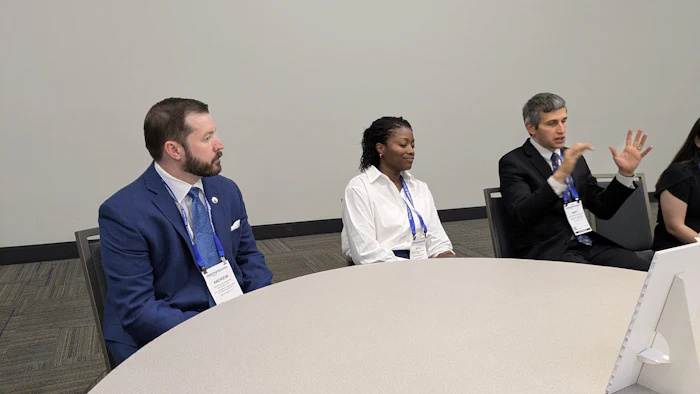
In a Sunday roundtable session titled “More Cardiac Anesthesia, Fewer Cardiac Anesthesiologists: Sustainable Staffing for All Anesthesiologists and High-Risk Patients,” cardiac anesthesiologists shared their concerns and described how their institutions have dealt with staffing shortages by placing cardiac anesthesiologists where they would be most effective.
Session moderator Matthew Vanneman, MD, said cardiac anesthesiologists are often spread thin because they are asked to handle one-off cases, such as an MRI or echo lab. They may also be enlisted to handle patients with high-risk cardiac lesions undergoing noncardiac surgery.
“We have to get cardiac anesthesiologists to recognize that the specialty is not a pure cardiac anesthesiology job anymore,” said Dr. Vanneman, who is a Clinical Associate Professor of Anesthesiology, Perioperative and Pain Medicine at Stanford University in Stanford, California. “We also need to ensure that the patient is getting the right care, and the anesthesiologist is getting the right person.”
The roundtable participants advised advocating for better staff management. This includes working closely with the general anesthesiologist or surgeon to agree on the right time to call in a specialist, such as a cardiac anesthesiologist.
An audience member said his healthcare system faced that need when they needed a transesophageal echocardiogram (TEE). He said the generalists in his hospital system do not do TEE, but there are specialists who do.
When to involve cardiac anesthesiology should be discussed and agreed upon before the patient is booked for surgery, the group said. Cases should be reviewed weeks in advance to determine whether a cardiac anesthesiologist is appropriate.
Session moderator Abimbola Faloye, MD, FASE, FASA, said that in the early stages of scheduling, her staff takes a 30,000-foot view and decides when and where anesthesia should be involved. However, final decisions in those cases are left up to the anesthesia department.
“That discussion starts from above,” said Dr. Faloye, who is Chief of Clinical Operations, Cardiothoracic Anesthesia at Emory University School of Medicine in Atlanta. “We said that if you’re not within the department of anesthesia, please don’t make recommendations about who is going to take care of a patient.”
Having staff management procedures in place is fundamental. However, session panelist Andrew Notarianni, MD, FASE, FASA, warned legal liability should be considered in the language.
“There’s a big (legal) difference between a hospital policy, recommendation, and practice guidelines,” said Dr. Notarianni, who is Assistant Professor of Anesthesiology, Chief of the Division of Cardiac Anesthesiology, and Fellowship Director for Adult Cardiothoracic Anesthesiology at Yale University in New Haven, Connecticut. “Being mindful of the language there is important.”
Is there a need to hire more cardiac anesthesiologists? Dr. Faloye said, “not necessarily,” and she pointed to ensuring the current staff is being used properly. Specifically, she said cardiac anesthesiology departments need to be mindful of when their staff members are being pulled to fill holes in other areas, such as the main operating room.
“Our cardiac group is separate from general (anesthesiology),” she said. “When we make the schedule, and we see there are holes on the general side, the chief from the general calls the chief from cardiac and says, ‘I have holes. Can you float me some people?’”