Artificial intelligence, real applications
Potential applications of artificial intelligence invite anesthesiologists to take a leadership role in implementation.

Artificial intelligence (AI) has the potential to transform healthcare, whether it’s predictive analytics in perioperative medicine or real-time clinical decision support in the OR and ICU. As a specialty that works with multiple disciplines across the healthcare system, anesthesiology should take an active role in guiding this transformation.
Galina Dimitrova, MD, Associate Professor and Section Lead for Electrophysiologic Procedures in the Division of Cardiothoracic Anesthesiology at The Ohio State University Wexner Medical Center in Columbus, said she believes anesthesiologists are uniquely qualified to push AI over the goal line in perioperative medicine.
“Every day, we synthesize large volumes of dynamic physiologic, laboratory, and procedural data to make rapid, high-stakes decisions that directly influence patient outcomes,” she said. “We continuously interpret changing vital signs, laboratory values, and clinical conditions while using short-acting medications and interventions to guide patients safely through some of the most vulnerable moments of their lives. This real-time integration of complex data mirrors the very strengths artificial intelligence seeks to enhance.”
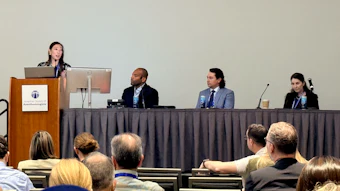
Dr. Dimitrova is the moderator of the Tuesday session, “Artificial Intelligence in Anesthesiology: Advancing Research, Clinical Practice, and Collaboration,” which will detail the potential for AI within the field.
Dr. Dimitrova said anesthesiologists need to be guardians of AI, both in terms of how it is used in the hospital and how it affects patients.
“We are trained to critically evaluate new technologies and demand evidence that they improve patient safety and outcomes before incorporating them into clinical practice,” she said. “This combination of innovation and healthy skepticism positions our specialty not only to advance artificial intelligence, but also to serve as responsible stewards of its implementation and strong advocates for our patients.”
Session presenter Jiapeng Huang, MD, PhD, FASE, FASA, echoed Dr. Dimitrova’s sentiments.
“[Anesthesiology’s] deep expertise in monitoring, physiology, and systems-based practice provides a strong foundation for shaping AI tools that enhance, rather than replace, clinical judgment,” he said. “When physicians are involved from the earliest stages of AI design and validation, the resulting systems are more transparent, trustworthy, and aligned with patient-centered outcomes.”
Dr. Huang, who is Chief Scientific Officer and Associate Dean for Clinical Research at University of Louisville Health in Louisville, Kentucky, said building AI tools that are safe, effective, and clinically meaningful requires more than technical expertise. It requires a group effort along the full spectrum of the healthcare system.
“Cross-disciplinary collaboration — uniting clinicians, data scientists, engineers, ethicists, patients, and regulatory experts — is essential to ensure that AI solves the right clinical problems, leverages high-quality contextually accurate data, and meets rigorous ethical and regulatory standards,” he said. “Without deep clinical input, even the most sophisticated models risk producing outputs that lack actionable value, perpetuate bias, or fail to integrate into real-world workflows.”
One of the areas in which AI could soon emerge is closed-loop anesthesia. It could integrate advanced monitoring technology and automated control algorithms to automatically adjust anesthetic medications while reducing adverse events and improving precision and safety. Clinical usage of closed-loop anesthesia is still just out of reach, but AI could help it cross over into real-world usage, according to session presenter Roya Saffary, MD, MBA, FASA, Associate Professor and Vice Chair of Clinical Operations in the Anesthesiology and Critical Care Medicine Department at Johns Hopkins Hospital in Baltimore, Maryland.
“Advances in AI paired with decision-support algorithms and continuous EEG and hemodynamic data could get us there,” she said. “The combination could allow development of systems that titrate anesthetic depth in real time, rather than relying on clinician adjustment.”
Imaging is another area in which AI could play a role, Dr. Saffary said. It could improve the accuracy and speed of ultrasound-guided nerve blocks and echocardiographic interpretation. However, these advances will take time and effort on the part of anesthesiologists.
“We are not quite at that point yet,” she cautioned. “Significant data validation is required for these tools to be deployed successfully, especially given the patient complexity and heterogeneity.”
Although AI usage in the medical arena is focused on streamlining workflow and improving diagnoses, session presenter Michael Mathis, MD, said it also could play a role in research by going where traditional randomized controlled studies can’t.
“Many medical journals and the scientific healthcare community at large have restricted the use of causal language to reporting randomized controlled trials (RCTs),” said Dr. Mathis, who is an Associate Professor of Anesthesiology at the University of Michigan in Ann Arbor. “Although RCTs remain an ideal approach for answering causal questions, methodologic advances in observational research have opened up the possibility for causal interpretations of well-designed observational research [using AI].”
Dr. Mathis said these opportunities arise either when practice norms vary across different institutions caring for similar populations of patients or when exogenous phenomena, such as medication shortages or health policy, changes lead to an abrupt change in practice within a particular institution or region.
“By leveraging these opportunities and [using AI] to execute carefully designed observational studies, causal effects of medical interventions in real-world practice may be inferred,” he said. “And furthermore, it may be the only practical source of information within clinical contexts which are either challenging or unethical to perform an RCT in.”
Dr. Dimitrova said she views Tuesday’s session as a call to action for anesthesiologists to get involved in helping define the role of AI within the specialty and within the medical profession.
“It’s an invitation for anesthesiologists to shape the future of AI through collaboration, rigorous research, thoughtful implementation, and an unwavering commitment to improving patient care,” she said.