From friction to new product
Taking your product idea from a pain point to a full-blown medical tool is a tough but navigable road.
Odds are at least one of the medical devices you use every day was dreamed up by an anesthesiologist who saw a point of friction with the way things were working – poor workflow or an inadequate tool – and created the solution.
Sean Runnels, MD, is one such anesthesiologist. While working in developing countries, he found it challenging to manage airways and provide anesthesia because more traditional methods like fiberoptic intubation were unavailable. That inspired him to create devices such as the Through the Cords articulating introducer, which takes advantage of videolaryngoscopes to allow more precise tip control throughout the intubation process.
Dr. Runnels is an Associate Professor of Anesthesiology at the University of Utah Hospital in Salt Lake City. He is also CEO of Through the Cords LLC, a company he founded after spending three years in Africa providing care aboard the Africa Mercy surgical hospital ship.
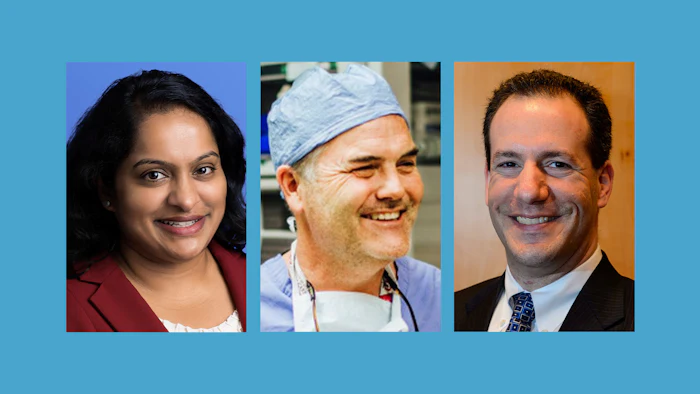
Dr. Runnels, who will be one of the panelists in the Tuesday session, “From Ideas to Products: Insights and Guidance From the Entrepreneurial Frontlines,” said anesthesiologists are in the driver’s seat when it comes to identifying gaps in delivering best-in-class clinical care.
“We practice inside the perioperative ecosystem, where surgery, critical care, regional anesthesia, and pain medicine intersect,” he said. “We feel the friction directly: inefficient workflows, inadequate devices, repeated workarounds, avoidable complications, and procedures that require disproportionate training to perform reliably. That friction is often the first signal of an unsolved problem.”
Such friction provides clues that could lead you to a novel, problem-solving product or technology opportunity. One such clue, according to Dr. Runnels, is anywhere training has become a substitute for better technology.
“When a procedure requires extensive experience, elaborate technique, or constant compensation by the operator, there may be an opportunity for a technical solution that shortens the learning curve and makes performance more reliable,” he said.
Another clue is the cross-use of tools that were never purpose-built for the task. He said the fiberoptic bronchoscope is a perfect example. It was designed for inspecting airways but has since been repurposed as an intubation device.
“It works, but it carries long training times and features that are often irrelevant to intubation,” he said. “I cannot recall needing to look 180 degrees backward over the tip of a bronchoscope to place an endotracheal tube. Repurposed tools often reveal opportunities for purpose-built devices that are simpler, faster to learn, more cost-effective, and better matched to the actual clinical job.”
According to session moderator Smitha Arekapudi, MD, SM, MBA, FASA, when a clue presents itself, you might map out your idea identifying the “friction” you intend to reduce or eliminate and what your product and technology could ultimately accomplish.
“It’s the idea of saying, ‘What is the problem? What is my solution?’” said Dr. Arekapudi, who is an anesthesiologist with Lakeview Anesthesia Associates in Chicago. “It can be as easy as jotting it down on a napkin.”
From this beginning stage, there are several steps to get your product from idea to market, according to session panelist Marc Zemel, CEO of Retia Medical in White Plains, New York. They include:
- Idea validation: Research the space to determine if the product is viable at a commercial level.
- Product development: Take the idea from prototype and verify its reliability, safety, and efficacy.
- Manufacture: Prove you can build the product once and then build it repeatedly. Determine if the cost from individual to mass production makes it a viable product.
- Clinical studies: Create a pilot to test your product.
- Regulatory: Use the FDA’s Q-Submission Program to request formal written feedback and meetings with FDA reviewers. Ultimately, move forward through regulatory approvals.
- Commercial development: Develop and prove your go-to-market strategy.
- Advisors: Assemble a team of trusted experts from various fields, such as marketing and regulatory, to help navigate the road to market.
- Financial: Recognize what funding milestones to focus on at which stages to drive product valuation and help raise capital.
Finding creative ways to make progress at the right time in the product life cycle can speed your product to success, said Zemel. Two years ago, his company partnered with Cleveland Clinic to develop a new software program. Each organization contributed in-kind work to make it happen, resulting in an FDA-cleared platform that the clinic is now using on more than 400 beds.
“It worked because we both saw a need and were resourceful in piloting the effort, rather than getting too bogged down in legal,” he said.
Paramount to the traditional steps of product development is knowing how customers will respond to your product once it clears all hurdles and roadblocks, said Dr. Arekapudi.
“Just because you get regulatory approval doesn’t mean [your product is] going to get bought,” she said. “You not only need to know your problem and the challenges at hand, but you also need to talk to a variety of potential consumers to understand what challenges and frictions they experience.”
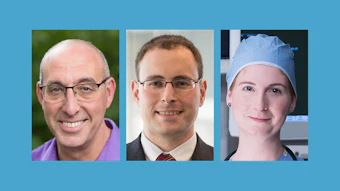
Joining Zemel and Dr. Runnels on the panel will be Michael O’Reilly, MD, Professor of Anesthesiology at the University of Michigan in Ann Arbor. Dr. O’Reilly is the former Vice President of Technology at Apple and former Chief Medical Officer at Masimo. He will discuss how he went from being a director of transplant anesthesia and medical director of IT to working in the technology sector and highlight the entrepreneurial products he encountered along the way.
The session will be conducted as a fireside chat so attendees can interact with the speakers.
“I think the fireside chat will give us the opportunity to discuss things that are beyond public hype,” Dr. Arekapudi said.
She pointed to artificial intelligence (AI) as an example.
“A lot of the AI hype is about selling rather than solving. I believe solving and selling go together,” she said. “[Anesthesiologists] are in a position of solving with integrity. And that’s our role, to really protect patients and patient safety and [to do that] we have to drive through the hype.”