ANESTHESIOLOGY Daily News
  • Meeting Info
  • Sessions
  • Claim CME
ANESTHESIOLOGY Daily News
Day
Friday
Saturday
Sunday
Monday
Tuesday
Topics
Ambulatory Anesthesia
Cardiac Anesthesia
Fundamentals of Anesthesiology
Geriatric Anesthesia
Neuroanesthesia
Obstetric Anesthesia
Pain Medicine
Pediatric Anesthesia
Perioperative Medicine
Physician Well-Being & Burnout
Professional Issues
Regional Anesthesia & Acute Pain
Safety & Quality
Technology
Workforce Shortages
Archive
2025
2024
2023
2022
2021
2015-2020
Resources
  • Meeting Info
  • Sessions
  • Claim CME
Topics
  • Ambulatory Anesthesia
  • Cardiac Anesthesia
  • Fundamentals of Anesthesiology
  • Geriatric Anesthesia
  • Neuroanesthesia
  • Obstetric Anesthesia
  • Pain Medicine
  • Pediatric Anesthesia
  • Perioperative Medicine
  • Physician Well-Being & Burnout
  • Professional Issues
  • Regional Anesthesia & Acute Pain
  • Safety & Quality
  • Technology
  • Workforce Shortages
By Day
  • Friday
  • Saturday
  • Sunday
  • Monday
  • Tuesday
Archive
  • 2025
  • 2024
  • 2023
  • 2022
  • 2021
  • 2015-2020
Facebook iconTwitter X icon LinkedIn iconInstagram iconBluesky
Oct 19th, 2026

Fighting the good fight in the opioid epidemic

Although deaths from opioids are trending down, there is still more to be done for rehabilitation and support.
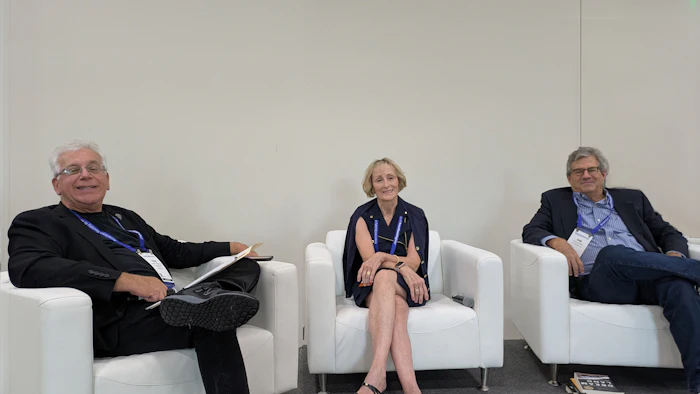

Three professionals seated on white chairs at a conference panel discussion event
From left to right: Session moderator Eugene Viscusi, MD, Bonnie Milas, MD, and author Sam Quinones.

During the Sunday session “Strengthening Societal Bonds to Save Lives Affected by the Opioid Crisis,” a doctor and an author turned a critical eye to the history of the opioid epidemic and what is working – and not working. 

Bonnie Milas, MD, a Professor of Anesthesiology and Critical Care at the Hospital of the University of Pennsylvania in Philadelphia, spoke from a deeply personal perspective about the opioid epidemic, having lost both of her sons to accidental overdoses of fentanyl. 

“I handle very large amounts of fentanyl every day, so how did my boys get into that?” she asked. “It was from the pills that were readily available in just about any school that you might be at in the United States.” 

She said her sons were engaged in community and organized sports. She and her husband were involved in their lives.

“But yet, they had the right combination of items that put them at risk,” she said. “And they became dependent (on the drugs).” 

Dr. Milas has since dedicated herself to making sure naloxone is as readily available as possible for anyone who needs it.

Co-speaker Sam Quinones, an award-winning investigative journalist and author of two nonfiction books about the opioid crisis, said naloxone alone won’t solve the crisis. 

“Narcan has been used as a solution. It’s not a solution,” he said. “It saves lives in a temporary sense in that it saves people from overdosing, but then they go back to using and eventually die if they don’t get off the street.” 

Beyond naloxone, Dr. Milas argued the rehabilitation industry needs a healthy review. 

“Opioid addiction is a relapsing disease. You don’t know when their cognitive behavior is going to change,” she said. “We had many stints (with my sons) in recovery programs, and that entire industry needs to be overhauled. There is no outcomes data. You send your loved one into a recovery program, but what is their success rate? What is their recidivist rate? None of that data is immediately available.”

Quinones wondered aloud how challenges of rehabilitation in addiction stack up against treatment received for other diseases. 

“This would not be tolerated in cancer care,” he said. “Addiction is almost like the stepchild. We need to change. We need to really think about how this care is administered.” 

Dr. Milas said attitudes toward addiction and its treatment also need to change. She first recommended reaching kids as early as possible. Next, she urged more research to understand the brain science behind addiction, along with genetic components. Finally, she said treatment programs need to last nine to 12 months in a cloistered and controlled environment. 

Quinones supported these ideas and added a less-than-scientific approach: hard work. 

Referring to his recent book, “The Perfect Tuba,” he proposed that getting kids in the habit of feeling rewarded and exhilarated by hard work and achievement would go a long way in keeping them away from drugs.

From The ASA Monitor
Making a Dent in the Academic Universe
CAPE: Moving from Economic Policy Groundwork to Strategic Action
Central Line Inside the Monitor Podcast – Advocacy: Our Future Is in Our Hands
Mark A. Warner, MD, to Present ‘Evolution of the Anesthesia Patient Safety Movement in America’
The Grassroots Battle is Won by Those Who Show Up
Congratulations to the 2026 Excellence in Research and Presidential Scholar Award Winners
More Content
Three panelists seated at a draped table during a professional conference or panel discussion event.
Perioperative Medicine
Examining the role of NMDAR antagonists
Oct 18th, 2026
Two professional headshots of men in business attire against blue and outdoor backgrounds
Fundamentals of Anesthesiology
Nerve stimulation could reduce postsurgical pain and opioid use
Oct 17th, 2026
Three professional headshots of business professionals displayed side by side on a blue background
Geriatric Anesthesia
New evidence shifts hip fracture anesthesia debate
Oct 17th, 2026
Eugene R. Viscusi, MD
ANESTHESIOLOGY 2023
Managing patients with opioid use disorder
Oct 16th, 2023
Left to right: T.J. Gan, MD, MBA, MHS, FRCA, FASA and Talmage Egan, MD, FASA
ANESTHESIOLOGY 2022
Is narcotic-free anesthesia still the goal?
Oct 24th, 2022
Left to right: Hesham Elsharkawy, MD, MBA, FASA, Jeffrey J. Mojica, DO, and Rene Przkora, MD, PhD
ANESTHESIOLOGY 2022
New approaches to chronic post-surgical pain
Oct 22nd, 2022
ANESTHESIOLOGY Daily News
© 2026 American Society of Anesthesiologists (ASA)
1061 American Lane | Schaumburg, IL 60173