Patient-centered, age-friendly care
Experts discuss screenings, strategies, and systems for managing older patients in the inpatient setting.
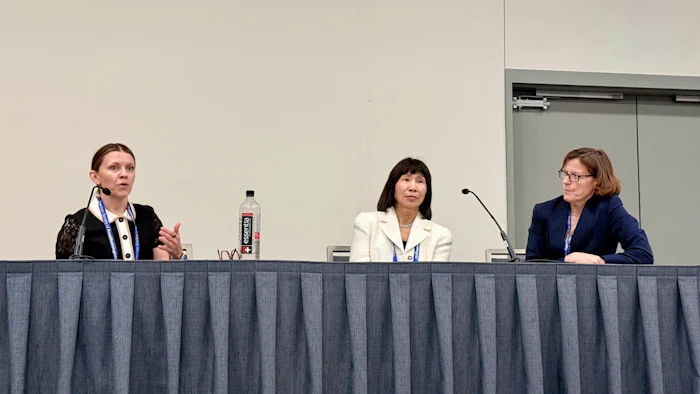
According to the American College of Surgeons National Surgical Quality Improvement Program (ACS-NSQIP), the average age of U.S. patients undergoing surgery in 2030 is expected to be 61.5 years. Whether this is a shocking statement or not, panelists at the Sunday session “Beyond Survival: Preserving Cognition, Mobility, and Independence After Surgery” said anesthesiologists must be prepared to effectively and holistically manage older patients.
One key to doing this is acknowledging and incorporating patient preference in the decision-making equation, said Frances Chung, MB, BS, FRCPC. Dr. Chung, who is a Professor in the Department of Anesthesiology and Pain Medicine at the University of Toronto in Canada, reviewed literature that supported preoperative screening of frailty and cognitive impairment. Currently, she said, only 2% of anesthesiologists regularly include such screening in their assessment.
“If you don’t measure it, you can’t improve it,” Dr. Chung stressed.
Brain health is extremely important to older adults who have surgery. A study published in The New England Journal of Medicine found:
- Approximately 75% would refuse treatment if the outcome was survival but with severe functional impairment.
- Approximately 89% would not choose treatment if the outcome was survival but with cognitive impairment.
Another consideration is that frailty and cognitive impairment frequently co-exist in older surgical patients and are associated with poorer long-term outcomes. But less than one in 10 are preoperatively screened for both.
Dr. Chung prefers the Montreal Cognitive Assessment (MoCA), which is a validated tool for measuring function and identifying at-risk patients. Other CI screenings are Mini-Cog and Ascertain Dementia (AD) 8. The FRAIL Scale can be used to help determine a patient’s frailty. This patient-reported questionnaire scores for fatigue, resistance, ambulation, illnesses, and loss of weight.
When risks are recognized ahead of surgery, physicians can prescribe prehabilitation to offset, she said.
Session moderator and presenter Sascha Beutler, MD, PhD, FASA, reviewed the 4M framework for treating older patients, which focuses on a patient’s matters (preferences or goals), medication, mentation, and mobility. Dr. Beutler is an Anesthesiologist at Mass General Brigham in Boston.
Addressing brain health with older patients should take place throughout the care pathway, she said. This includes preoperative screening for neurocognitive disorders and risk factors, perioperative identification of functional biomarkers, intraoperative medication strategies to prevent delirium, and postoperative measurements to detect acute changes from baseline.
“Get family [or caregivers] involved postoperatively or, more importantly, from the beginning. This creates better outcomes for the patients,” Dr. Beutler said.
According to research, approximately 40% of postoperative delirium (POD) cases are preventable. Risk factors include advanced age (over 65 years), poor vision/hearing, preexisting illness or infection, and presence of a neurocognitive disorder. POD has a disastrous cascade of potential adverse events, she said, such as postoperative complications, prolonged hospital stay, short- or long-term cognitive impairment, discharge to facility, and mortality.
Dr. Beutler recommended using the ASA Perioperative Brain Health Initiative as a resource.
This 4M framework closely matches the Age-Friendly Hospital Measure established by the Centers for Medicare & Medicaid Services (CMS) in 2025. According to CMS, this structure includes five domains “designed to assess features of a healthcare organization relevant to its capacity to provide good healthcare.”
“The Age-Friendly system supports the transition from disease-centered care to patient-centered care,” said Michelle Humeidan, MD, PhD, Clinical Professor of Anesthesiology at The Ohio State University College of Medicine. “It embraces all the different aspects of a patient’s life, characteristics, and preferences that could impact outcomes.”
Currently, Dr. Humeidan said, the Age-Friendly inpatient quality reporting measure is a yes/no attestation meant to acknowledge what processes are or aren’t in place and identify where there are gaps. Its purpose is to increase transparency of healthcare organizations to patients. However, as CMS collects information from health systems, she predicts it will evolve into more formal incentives and a stick to grade facilities.
“This bigger-picture approach is an opportunity to expand our ability to impact care and outcomes, regardless of the disease,” Dr. Humeidan said.