Recognizing research in anesthesiology
The 26th Annual Celebration of Research honors clinical research into gene stabilization to treat lung injury, and using machine learning to understand how OR decisions are made.
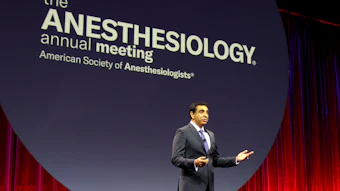
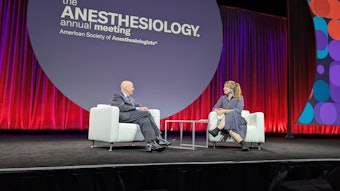
From residents to early-career investigators and senior researchers, the 26th Annual Celebration of Research will feature the best in science from the entire anesthesiology research continuum.
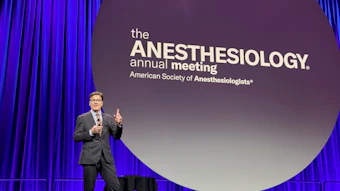
James Rathmell, MD, Anesthesiology Editor-in-Chief and moderator of the session, said the celebration is about more than handing out accolades.
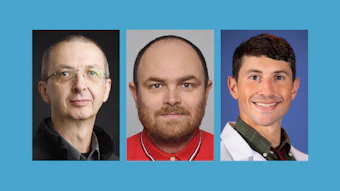
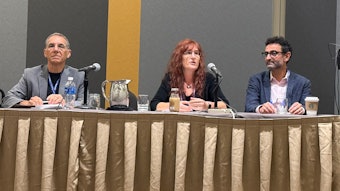
“It is a visible statement that research and mentorship are essential to the future of anesthesiology and to improving patient care,” he said. “The awards recognize both sustained accomplishment and the future of discovery in our specialty.” From left to right: Alex Evers, MD, Sachin Kheterpal, MD, MBA, and James Rathmell, MD.
Excellence in Research
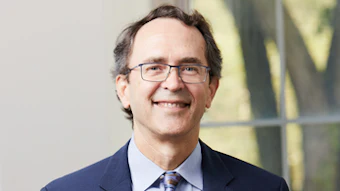
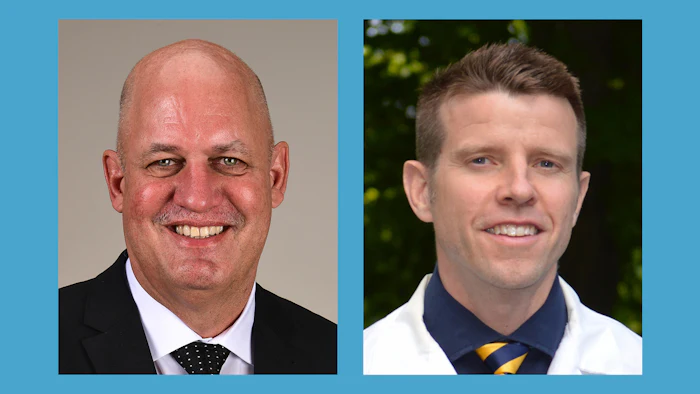
The recipient of the 2026 Award for Excellence in Research is Holger K. Eltzschig, MD, PhD. Dr. Eltzschig is the John P. and Katherine G. McGovern Distinguished University Chair, Professor of Anesthesiology, Surgery, and Biochemistry, Associate Vice President of Translational Medicine, and Director of the Institute of Perioperative Medicine at McGovern Medical School at UTHealth Houston in Texas.
Dr. Eltzschig has built a research program over the last two decades that spans fundamental discovery, mechanistic biology, translational investigation, and human clinical trials, said Alex Evers, MD, who nominated Dr. Eltzschig for the award.
“His work has defined key molecular pathways responsible for perioperative organ injury and has advanced these discoveries from the laboratory to clinical testing in patients,” said Dr. Evers, who is the Henry E. Mallinckrodt Professor of Anesthesiology and Professor of Internal Medicine and Developmental Biology at Washington University School of Medicine in St. Louis, Missouri. “This body of work directly addresses one of the most important and persistent challenges in anesthesiology and perioperative medicine: postoperative mortality.”
Dr. Evers said Dr. Eltzschig is among a small number of anesthesiology investigators who have successfully translated molecular insights into human trials.
“His laboratory demonstrated that hypoxia-inducing factor (HIF)-1 stabilization in pulmonary epithelium protects against lung injury in animal models,” said Dr. Evers. “His findings led to a randomized phase 2 clinical trial of pharmacologic HIF activation in 448 patients with acute respiratory distress syndrome (ARDS) and showed reduced disease severity, particularly in severely hypoxic patients.”
“Dr. Eltzschig’s research is a compelling example of bench-to-bedside science,” added Dr. Rathmell. “He has defined how hypoxia-inducible factor signaling and related pathways influence inflammation and tissue injury, and he has carried those discoveries into human studies aimed at preventing acute lung injury and other forms of perioperative organ injury.”
James E. Cottrell, MD, Presidential Scholar Award
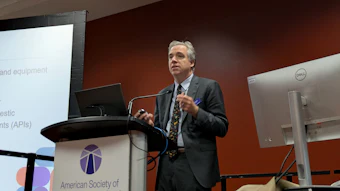
Michael Mathis, MD, is the recipient of the 2026 James E. Cottrell, MD, Presidential Scholar Award. He is an Associate Professor of Anesthesiology at the University of Michigan in Ann Arbor. Dr. Mathis’ research focuses on using perioperative data and novel analytic techniques to improve the safety and outcomes of patients undergoing surgery – particularly cardiac surgery.
Dr. Mathis combined his clinical experience as a cardiac anesthesiologist with expertise in clinical informatics, machine learning, physiologic waveform analysis, and multicenter research to understand how decisions made in the OR, such as blood pressure management, resuscitation strategies, and the use of cardiovascular medications, affect outcomes in cardiac surgery, said Sachin Kheterpal, MD, MBA, who nominated Dr. Mathis for the award.
“[Dr. Mathis] is particularly interested in reducing complications, such as acute kidney injury, and in understanding why clinical practice varies so widely among clinicians and hospitals,” said Dr. Kheterpal, who is a Professor of Anesthesiology and Chair of the Department of Anesthesiology at the University of Michigan Medical School. “Importantly, his work is not focused on machine learning just for its novelty. It is designed to produce practical evidence and decision-support tools that clinicians can use to improve patient care.”
Dr. Kheterpal said Dr. Mathis’ research will help anesthesiologists use data more rigorously to determine which practices are most effective, identify patients at greater risk, and reduce unwarranted variation in care.
Mentoring Excellence in Research Award
The Foundation for Anesthesia Education and Research (FAER) will present the Mentoring Excellence in Research Award.
“FAER’s presence underscores the indispensable role of research funding, training, and mentorship in developing the next generation of anesthesiology investigators,” said Dr. Rathmell. “And the [Mentoring Excellence Award] recognition is an important reminder that research excellence depends not only on individual discoveries but also on the mentors who help other investigators develop and succeed.”
Finally, the winners of the 2026 ASA Resident Research Essay Contest will be announced.
“What makes the Celebration of Research especially meaningful is that it recognizes the entire research continuum – from residents receiving the three ASA Resident Research Essay awards, to an outstanding early-career collaborator, an exemplary research mentor, and a senior scientist with a sustained record of discovery,” Dr. Rathmell said.