The call for a system-wide approach to improve high-risk surgical patient outcomes
Pierce Lecture spotlights high-risk populations who benefit from implementation science to improve delivery of evidence-based care.

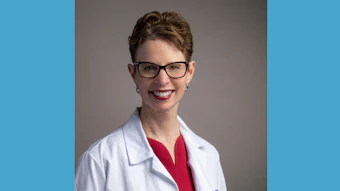
According to Carol Peden, MD, MB ChB, MPH, FRCA, FFICM, FACHE, improving outcomes for high-risk surgical patients takes more than technical excellence in the OR. It means rethinking the entire surgical journey from diagnosis through long-term recovery.
In Saturday’s Ellison C. Pierce Lecture, "Scaling Up: Perioperative Pathways to Improve High-Risk Patient Outcomes," Dr. Peden will focus on integrating what healthcare professionals already know and what is routinely delivered in practice into patient-centered perioperative pathways supported by implementation science principles.
Dr. Peden, an Adjunct Professor of Clinical Anesthesiology at the University of Pennsylvania Perelman School of Medicine in Philadelphia, underscored the idea that successful surgery should be measured by more than survival or a safe transfer to the recovery room. It should be measured by whether patients ultimately achieve their goals, including improved quality of life, reduced pain, preserved independence, and long-term survival, she said.
“We know a great deal about the evidence-based practices that improve outcomes,” she said. “The challenge is ensuring those components are delivered consistently, reliably, and equitably across every hospital and by every member of the perioperative team.”
Major advances in perioperative medicine will come from both new discoveries and from redesigning healthcare systems so that coordinated evidence-based care becomes the standard for every patient, every day – from the contemplation of surgery to the return home without complications, and a successful achievement of the surgical goals.
Patient-centered perioperative outcomes may take days, weeks, or months to achieve and require coordination of multiple clinicians, the patient, family, and leadership that support quality improvement efforts. Dr. Peden, who is also an Adjunct Professor of Clinical Anesthesiology at the University of Southern California Keck School of Medicine in Los Angeles, said the goal is to reduce unwarranted variation in care so that outcomes depend less on where a patient receives treatment and more on the consistent application of evidence-based practices.
According to Dr. Peden, two vulnerable patient groups offer great opportunities for improvement: emergency general surgery patients and older adults undergoing surgery.
“Patients requiring emergency abdominal surgery have some of the highest surgical mortality rates, because they are frequently older, frailer, and present with life-threatening illness, leaving little time for optimization,” she said. “Although emergency general surgery accounts for only around 11% of surgical procedures in the United States, it is responsible for almost half of all surgical deaths.”
Patients undergoing emergency laparotomy, for example, have historically experienced 30-day mortality rates of 14%-18%, with mortality exceeding 24% in patients over 80 years old.
“Research has shown that evidence-based perioperative pathways designed for this high-risk group of patients can significantly improve outcomes,” she said.
The second vulnerable population – older adults undergoing surgery – represents one of the fastest-growing challenges facing healthcare systems, Dr. Peden said.
“Approximately 30% of all surgeries are now performed on patients over the age of 65,” she said. “In the United States, population-based estimates suggest that one-year mortality after major surgery is approximately 13%, rising to more than three times that following nonelective surgery, particularly in patients living with frailty or dementia."
For older surgical patients, Dr. Peden said success is measured by more than just surviving surgery. Preserving cognition, preventing delirium, maintaining independence, and optimizing quality of life are equally important outcomes.
Together, these two populations illustrate why modern perioperative care must extend beyond the operating room to coordinated, evidence-based pathways that address the whole patient and their short- and long-term outcomes, she said.
According to Dr. Peden, such principles are being applied to brain health initiatives and other high-risk patient populations. Advances in implementation science are making it possible to spread successful approaches across regional, national, and international healthcare systems, extending benefits to thousands of patients rather than only those treated at a handful of leading centers.
Drawing on experiences from programs such as the United Kingdom’s National Emergency Laparotomy Audit (NELA), international Enhanced Recovery After Surgery programs, and ASA’s Perioperative Brain Health Initiative, Dr. Peden said that generating clinical evidence is only the first step. The greater challenge often lies in helping busy healthcare teams consistently implement best practices.
“Change depends on engaging multidisciplinary teams, understanding local barriers, measuring progress, and giving clinicians the tools and confidence to improve,” she said. “Watching hospitals transform outcomes through that process has been one of the most rewarding aspects of my career. Success begins with curiosity about how we do better, challenging norms, finding the data, telling the patient stories, and building networks of colleagues and collaborators.”
While emerging technologies and new therapies will shape the future of perioperative medicine, Dr. Peden said she believes today's greatest opportunity is to integrate what healthcare professionals already know improves outcomes and what is routinely delivered in practice.
“The future of perioperative medicine will certainly include new technologies, artificial intelligence, and novel therapies. But our greatest opportunity today is to use all of the above, combined with implementation science, to close the gap between what we already know and what we consistently deliver,” Dr. Peden said. “Every patient deserves care informed by the best available evidence, and every healthcare system has the potential to improve. The challenge is not simply discovering better care, it is learning how to deliver better care reliably and at scale.”