Weighing your options
Can a move from clinical practice to leadership pay off for anesthesiologists?

When you know, you know. For some anesthesiologists, that mindset may come easy when considering a move from clinical practice to a leadership or administrative role. For others, it isn’t so clear.
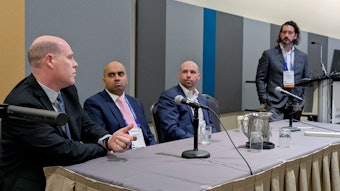
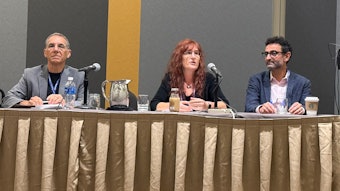
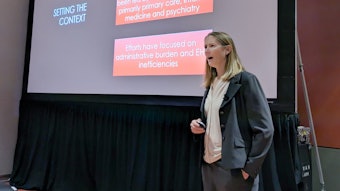
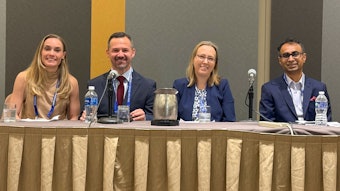
There are many motivational factors, core competencies, and additional knowledge and skills anesthesiologists must take into consideration before making the leap, said Ruben J. Azocar, MD, MHCM, FASA, FCCM, FACHE, one of the panelists at the 2025 session, “Thinking About Crossing the Chasm: How to Navigate From Clinical Start to Administration.” Dr. Azocar is Professor of Anesthesiology at Tulane University School of Medicine in New Orleans.
“Anesthesiologists have the training and the skill set to be excellent leaders and hospital administrators,” Dr. Azocar said. “I believe that personal drive and being goal-oriented is one aspect that drives many. The desire to change and being able to control some of the variables among the volatile and uncertain health care reality might be another strong drive.”
Some physicians are drawn to leadership through a desire to extend their impact beyond the bedside by shaping systems, influencing policy, and driving innovation at scale, according to fellow presenter Ranjit Deshpande, MBBS, MBA, FCCM, an Associate Professor of Anesthesiology at Yale School of Medicine in New Haven, Connecticut. “There are also deeply personal motivators. Sometimes, anesthesiologists seek intellectual challenges or want to grow beyond clinical mastery. Others are motivated by a passion for mentorship, strategic thinking, or team development. For some, it’s simply the physical and emotional demands of full-time clinical practice that prompts them to explore alternate paths.”
When anesthesiologists are driven to improve the patient experience at the macro level and consider a transition to an administrative role, it’s important to plan accordingly, said Tal Levy, MD, MBA, Director of Anesthesiology and Medical Director of CitiMed Surgery Center in Queens, New York. That includes earning additional education, developing “soft skills,” and seeking guidance from those with expertise.
“Although physicians are immersed and well-versed in medicalese, when considering a career shift, I advise mentees to learn the language of the corporate world,” Dr. Levy said. “Furthering education, whether by getting an MBA, an MHA, or another degree can always be helpful, but many physician leaders are self-taught or learn on the job. I recommend furthering ‘soft skill’ growth through reading, listening to podcasts, and working with coaches as needed. Self-awareness and the desire to continuously improve are both integral to making a career change.”
Dr. Azocar echoed Dr. Levy’s advice.
“Additional education and degrees are fundamental,” Dr. Azocar said. “They add credibility, and you can’t really manage what you don’t understand.”
Dr. Levy said preparing for a leadership or administrative role also includes honing your time management, creativity, and adaptability. These are important “soft skills” that many anesthesiologists already have, as they are an integral part of the profession. Take stock in whether you have those skills, she said, and don’t be afraid to seek tips for improvement. Also important, Dr. Levy added, is improving communication skills and fostering emotional intelligence.
During the session, Dr. Deshpande took an even deeper dive into the talents and traits anesthesiologists need to transition into leadership roles. He emphasized competencies such as strategic thinking, aligning clinical and organizational goals, effective communication across hierarchies, conflict resolution, accountability, and systems-level insight.
“Beyond these core capabilities, physician leaders must develop fluency in health care finance, operations, and quality frameworks,” he said. “That includes budgeting (RVUs, margin versus mission), throughput and staffing models, supply chain management, regulatory and compliance literacy, and data-driven decision-making. Many of these areas benefit from formal leadership development, but hands-on experience and strong mentorship are just as critical.”
Of course, there are pros and cons to all change, Dr. Levy said. The pros of moving to a leadership or administrative role include gaining a deep sense of accomplishment when affecting change at the macro level, having more control over your schedule, and improving work-life balance.
Although the professional rewards can be significant, such as expanded influence, broader recognition, and opportunities for innovation, Dr. Deshpande also cautioned that transition comes with trade-offs.
Panelist Heather McFarland, DO, FASA, said the many pros include having the opportunity to improve operational efficiencies and patient outcomes at scale, as well as the ability to influence policies, systems, and care delivery beyond individual patients.
Dr. McFarland, who is an Associate Professor of Anesthesiology at University Hospitals-Cleveland Medical Center in Ohio, said the cons can also be significant.
“As I think about the cons, there is an increase in bureaucracy, more meetings, policy reviews, and politics,” she said. “I have strived to balance that by remaining clinical in some capacity and focusing on the flexibility and increased opportunities for improvements.”
Dr. Levy noted the disadvantages as well.
“The change to ‘nonclinical’ can lead to a loss of a sense of team membership because you may be considered ‘in charge’ of the team,” Dr. Levy said. “And the distinction between ‘work time’ versus ‘off time’ may become less clear because you may not be able to fully unplug in the same way when away from work at the clinical level.”
According to Dr. Deshpande, moving into an administrative role may mean less time for direct patient care, reduced clinical identity, and new stressors related to budget, HR, and institutional politics.
“It can also lead to being perceived as disconnected from clinical colleagues and, depending on the structure, may result in lower compensation, especially when stepping away from high-acuity clinical work,” he said.
Still, for those committed to driving change and shaping the future of health care, the rewards often outweigh the challenges. As Dr. Deshpande noted, “Leadership isn’t about leaving the bedside behind. It’s about bringing the voice of the bedside into every room where decisions are made.”
Before making any transition, it’s important to look at the big picture, said panelist James L. Hill Jr., MD, MBA, CPE, FASA, FACHE, who is CEO at UH Parma Medical Center in Parma, Ohio.
According to Dr. Hill, “Cultivating leadership competencies, embracing continuous learning, and building relationships across disciplines are equally, if not more, important in crossing the chasm.”
“I encourage clinicians contemplating this path to seek mentorship, explore formal leadership development programs, and reflect deeply on their personal motivations,” Dr. Hill said. “The journey from clinical to administrative roles is rarely linear but profoundly rewarding when aligned with one’s values and goals. Remember, leadership is a skill set that can be learned and refined; credentials can open doors, but authentic leadership is built on action, collaboration, and resilience.”
Finally, Dr. Azocar offered one last piece of advice.
“You can always go back to your prior role,” he said.