Finding humanity through tragedy
A physician’s terminal illness helps bring meaning to his life.
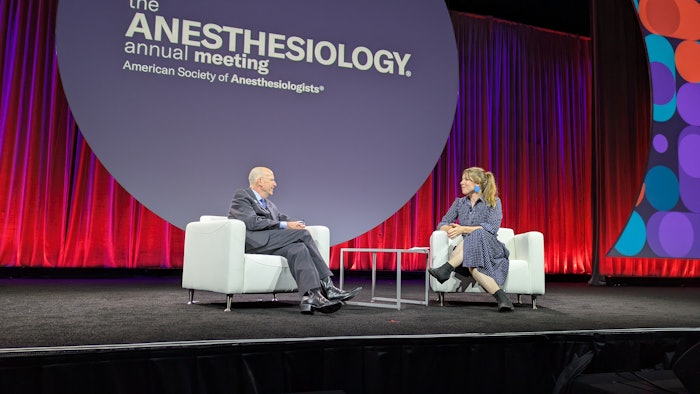
Dr. Paul Kalanithi was a neurosurgeon and writer who was diagnosed with and subsequently succumbed to stage IV metastatic lung cancer at the age of 36. With his diagnosis, he found himself in the unfamiliar position of being a patient rather than a healer. But he also found himself seeking answers to questions that were more than just medical in nature.
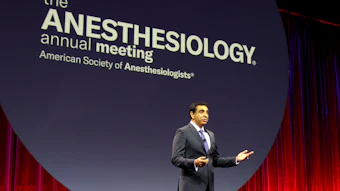
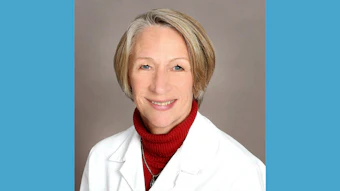
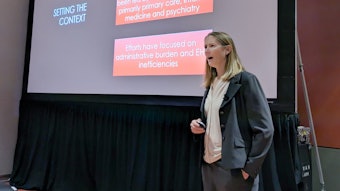
In 2025’s keynote session “When Breath Becomes Air: From Physician to Patient – The Intersection of Medicine, Mortality, and Humanity,” Dr. Kalanithi’s wife, Lucy Kalanithi, MD, FACP, Clinical Associate Professor of Medicine and an Internal Medicine Specialist at Stanford Medicine in Palo Alto, California, detailed how their lives were forever changed when Paul was forced to confront his own mortality, beginning when they first heard his diagnosis.
“That was one of those moments when something falls in your lap that upends everything. When that happens, you’re the same person you were five minutes before, but you’re also a totally different person suddenly facing a whole new life,” she said. “And just in a moment, you sort of realize how much your current identity is tied up in a future conception of yourself.”
For Paul, who also studied English literature, philosophy, and history, the only way to cope with this earth-shattering diagnosis was to turn to writing, one of his first passions. He began journaling, writing essays, and eventually wrote the book “When Breath Becomes Air.” (It was published posthumously and went on to spend several weeks on The New York Times nonfiction bestseller list.)
The fact that the Kalanithis were both physicians was helpful at the outset. They knew what to do and what medications to take. But Lucy said it didn’t help with some of the bigger issues they suddenly faced. That’s where Paul’s love of writing came in.
“He wrote that ‘I thought there would be this path that I could follow, and suddenly it’s just windswept and this barren wasteland,’” Lucy said. “He ended up turning to poets and writers across history thinking about how humans are dealing with mortality and suffering. And so, all of our textbooks and training [as physicians] weren’t relevant to the biggest questions he had.”
Lucy said she frames outlooks for her patients in terms of the best case, the worst case, and the most likely case. And so it was for Paul after his diagnosis. The time he had left was uncertain. But what he would do with that time became well-defined.
“I watched Paul [use that framework] in the face of that uncertainty,” she said. “He said, ‘If I have 10 years, I’ll go back to treating patients,’ which he ultimately did do until he became too sick. Then he said, ‘If I only have one year, then what I want to be doing is immerse myself in writing. And if I have less time than that, then I want to be with the people I love.’”
One of those people was the couple’s daughter, who was born eight months before Paul died.
“That felt really crazy to have a child [during that time], but also really kind of obvious. It took a little wrestling, of course, and we had a lot of family support to do that,” Lucy said. “I worried that here’s a person who’s dying, and you bring a child into that scenario. Wouldn’t that make it so much harder to actually end up needing to say goodbye to that child?”
When they were having the conversation about having a baby, Paul said something profound and unexpected.
“He said, ‘Wouldn’t it be great if it did make it more painful?’ And that was a pivotal moment for me,” Lucy said. “There are none of us who decide to have a child because it’s going to make your life easier. We do so many things in our lives that make things harder, but they also make things more meaningful at the same time.”
Making life meaningful was one of the central themes of Paul’s book. Lucy said in his final months, it was also a pursuit that gained urgency.
“Paul was thinking about striving; striving to keep getting better and better in whatever way that was,” she said. “He [said when you are] a physician and surgeon the deck is stacked, you will lose. Meaning you can be the best surgeon in the world, and you still will have bad outcomes, and you still will have things not go the way you wanted to for your patient. But you’re still striving. So that idea of continual struggle for meaning was truly important for him. And I think that’s what he left for our daughter when he was writing his book.”
Lucy closed her talk with a story about an anesthesiologist that she said illustrates how we can help and support each other when we fail.
She said the anesthesiologist made a small mistake that ended up having significant repercussions as well as a negative outcome for the patient. The anesthesiologist was so devastated that he left the OR and didn’t return for months. What ultimately brought him back was a colleague who needed a procedure. The colleague contacted the anesthesiologist and said, “I need someone good in my case. Would you be willing to come back for me?” That was enough to bring the anesthesiologist back. After that, he was able to reshape and rebuild his career.
“I thought that was such a beautiful story of the ways in which we can hold space for each other’s mistakes and each other’s fallibility and humanity,” Lucy said.