A healthy debate on intubation techniques
Airway experts present opinions on airway management approaches.
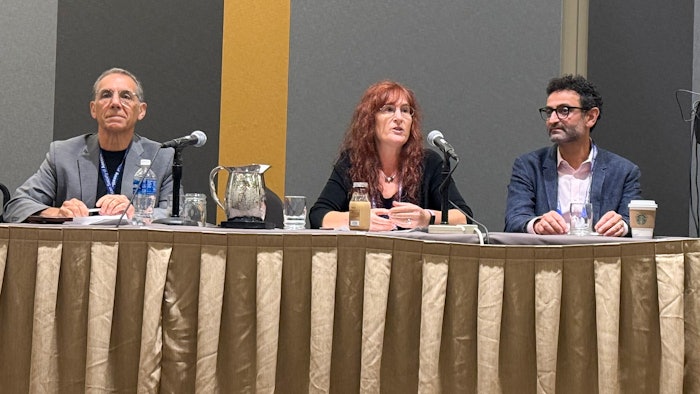
The 2025 session “Has Videolaryngoscopy Made Other Airway Techniques Obsolete?” featured ASA’s new fireside chat format along with a healthy dose of humor and understanding. The proffered temperature check was asking attendees if they own smart watches that display the current year or phones that have cameras. The punchline was if they answered yes, then they should be learning and practicing videolaryngoscopy.
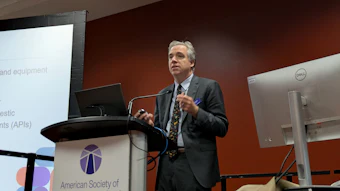
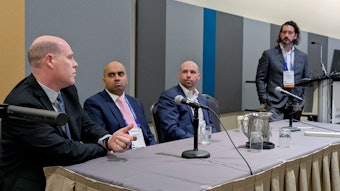
The unanimous opinion from session moderator William Rosenblatt, MD, a Professor of Anesthesiology at Yale School of Medicine, and panelists Michael Aziz, MD, and Lauren Berkow, MD, FASA, was that direct laryngoscopy (DL) and flexible scope intubation are not obsolete but are outperformed by videolaryngoscopy (VL). Meaning, there are use cases for both, but if you aren’t using VL, Dr. Aziz quipped, you should be.
“Direct laryngoscopy is not dead. It is dead as a primary technique but should always be available as a backup,” said Dr. Aziz, a Professor of Anesthesiology and Perioperative Medicine at Oregon Health & Science University in Portland.
Dr. Berkow is a Professor of Anesthesiology and Chief of the Division of Neuroanesthesia at the University of Florida Health in Gainesville. Although she occasionally played devil’s advocate to Dr. Aziz, and shared more real-world scenarios of using other intubation techniques, she agreed that VL should be the first-line standard. But the buck doesn’t stop there.
“The one thing that all airway algorithms and airway management guidelines stress is the importance of having backup plans. In order to be able to implement a backup plan, you have to be comfortable and proficient in more than one airway technique,” she said. “I think it’s valuable to practice videolaryngoscopy, especially with a hyperangulated [HAVL] blade where tube placement may not be as easy as if you use a standard geometry videolaryngoscopy [SGVL] blade. You practice it in normal airways, and that way when you encounter a difficult airway, you’re comfortable in the technique so you can intubate that patient successfully as well.”
VL experienced a surge during the COVID-19 pandemic, the panel agreed. At the same time, the use of awake flexible scope intubation further decreased. VL allows for greater space between the clinician and patient, and it was also thought to reduce exposure risk to viral contamination.
In recent years, Dr. Aziz has challenged colleagues who are on the DL side of the debate to try HAVL on every intubation for a period of time.
“Do it on every single patient, and you’ll never go back. None of them have ever gone back,” he said. “They do hyperangulated videolaryngoscopy as a routine; they don’t mess with the standard geometry blade. And I think they recognize the importance of DL and standard geometry VL, but they’ve overcome the challenge of the tube delivery part of it and would rather have that better view every time.”
Still, the literature isn’t conclusive, and there are specific scenarios where intubation with a flexible scope is preferential, said Dr. Berkow. For example, she sees a fair amount of patients who come in with a cervical fracture in a halo, in which case she always intubates awake with a flexible bronchoscope.
“The flexible bronchoscope is more versatile than any other airway device that we have,” Dr. Berkow said. “It’s the only device you can do awake or asleep, oral or nasal, and you can suction through it. No other airway device can do all those things.”
Dr. Rosenblatt et al., in conjunction with ASA, published a decision tree approach in 2022 that helps physicians in the airway management decision-making process.
“You don’t want to do something that’s going to hurt a patient,” he said. “And I actually think a flexible scope if done right can be more benign than blade laryngoscopy.”
The elephant in the room throughout the discussion, and well into the Q&A portion of the session, was that despite promoting VL as the principal method, the devices are expensive and not always accessible. Many facilities and private practices only have one videolaryngoscope for every handful of ORs, if that.
Dr. Berkow said this is unacceptable and that anesthesiologists in leadership positions must use their voices to advocate for the necessary equipment to keep patients safe.
Dr. Aziz agreed that videolaryngoscopes should always be available. But again, that doesn’t mean people should run home and throw out the older devices.
“Direct laryngoscopy is a simple, portable tool that you don’t know when you’ll have to fall back on. Whether it be a technological failure of the videolaryngoscope and something breaks, or the location you’re in [doesn’t have one], or there’s a patient in front of you in extremis and you have a direct laryngoscope. I think every anesthesiologist should still be comfortable intubating with direct laryngoscopy.”
In the long run, keep training and keep advancing was the message of all three airway enthusiasts. Be intentional at training the next generations of clinicians so they have a toolbox of techniques they’re comfortable with, the panel said. And continue to maintain your own skills, because life is unpredictable.