Tackling the well-being crisis
ASA is taking concrete steps to mitigate burnout and improve well-being within the specialty.
It’s no secret that emotional health and well-being are pervasive concerns within anesthesiology circles. Numerous surveys confirm the far-reaching personal and professional impact of negative events on the profession. For instance, 88% of anesthesiologists who participated in the 2012 survey, “The Impact of Perioperative Catastrophes on Anesthesiologists,” found they needed time to recover following a perioperative catastrophic event. Two-thirds of respondents said they believed their ability to care for other patients was compromised in the four hours following a catastrophic event. Nearly 20% said they “never fully recovered” from the event.
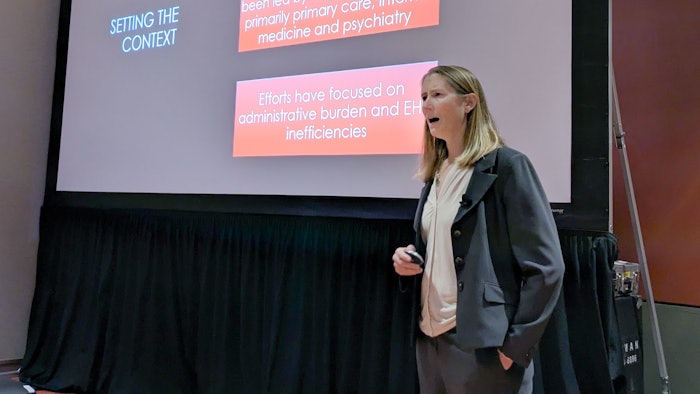
What is sobering is how little those statistics have changed in the 17 years since the survey was first conducted. That lack of improvement and what ASA is doing about it were the subjects of the 2025 panel discussion, “ASA at the Vanguard of Health Care Well-Being”.
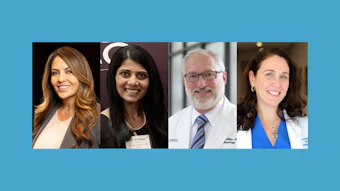
The first step toward correcting the issue is identifying it, according to Rebecca Margolis, DO, FAOCA, an Anesthesiologist at Children’s Hospital of Los Angeles. To that end, ASA’s Committee on Physician Well-Being conducted a survey earlier this year to better understand how perioperative catastrophes affect anesthesiology professionals.
The survey data showed 71% of those who had experienced a catastrophic event in the OR said they felt responsible for the event and felt shame. Ninety-one percent experienced psychosocial symptoms after the event, and 67% said care for their patients was compromised for the next four hours, which matched findings from the 2012 survey.
Notably, 23.3% of respondents said they would consider leaving the field following a catastrophic event.
“That’s double the 2012 survey,” Dr. Margolis said, adding that both surveys show there is still a need for support for anesthesiologists who face catastrophic events in the OR.
“This is going to happen to you,” she warned. “Psychosocial symptoms are normal. Shame is pervasive. Twice as many of us are considering leaving the field, and 20% of us will never recover. So, what can we do?”
The ASA Committee on Physician Well-Being is currently working on tools to help address this unmet need within the anesthesiology community. One of those tools is the Well-Being Influencers Survey for Healthcare (WISH), an instrument that focuses on factors driving mental states, such as burnout, rather than the individual’s mental health state.
“I’m not speaking hypothetically when I say the WISH metric is going to absolutely be game-changing for physician well-being and clinician well-being throughout all of medicine,” said session moderator Amy Vinson, MD, FAAP, Senior Associate in Perioperative Anesthesia at Boston Children’s Hospital.
“To make things better for health workers, we have to improve our systems,” said Elliott Higgins, MD, Director of Health and Well-Being Researcher at the David Geffen School of Medicine at the University of California, Los Angeles. “If we’re going to improve our systems, we need to measure what shapes well-being within them.”
To that end, the WISH metric works by asking health workers for their perceptions across eight influencers of well-being. They are:
- Work conditions
- Psychological safety
- Perceived social support
- Leadership support
- Work meaning
- Inclusion and belonging
- Justice
- Work-life integration
Higher WISH scores within a health care system have shown a correlation to lower burnout, while lower scores correlate with higher burnout, he said.
Dr. Higgins referenced recent studies indicating that anesthesiology has a higher “intention to leave” than some other specialties. “That’s a big problem,” he said. “The huge question in front of the field right now is what do we do about this?”
One potential solution is an online curriculum developed by the Society for Pediatric Anesthesia that covers three core areas of well-being:
- Adverse events and peer support
- Resilience
- Burnout, depression, and substance use disorder
The idea behind the curriculum was born out of the COVID-19 pandemic, according to Stephanie Black, MD, EdM, an Attending Anesthesiologist in the Department of Anesthesiology and Critical Care Medicine at Children’s Hospital of Philadelphia.
“There were so many innovations and so much we learned about ourselves in 2020. One of those things was the need for well-being,” she said.
As more health systems pivoted to the internet as a communications vehicle to replace derailed in-person interactions, Dr. Black said she and others realized online outreach could also be a solution for well-being education. Hence the curriculum was created with modules dedicated to different topics. It is available online free of charge to anyone.
Dr. Black said they are always seeking feedback and invite anyone to visit the website, view the curriculum, and offer suggestions for improvement. She said content will be continually added and updated.
“If you’re interested in contributing more content, obviously there’s a ton that we need,” she said. “We don’t have anything on suicide, for example, and there’s a whole host of other topics we’d love to see put together.”
While there is much work to be done, anesthesiologists are stepping up and facing the well-being issues within their profession head-on, Dr. Vinson said.
“Anesthesiologists understand the assignment,” she said. “It’s happening, but none of the people doing this work are doing it to publish papers, get promoted, or make money. Every single person is doing this because they have a genuine love for their colleagues, and it hurts them when they see them suffering.”