All the way home
Innovations in ambulatory anesthesia can contribute to improved outcomes and get patients home faster.

Ambulatory anesthesia is a win-win for patients as well as for providers. Patients typically can return home sooner and resume their normal activities after their procedures. Physicians benefit from streamlined processes and shorter wait times, improved workflows, and safe and cost-effective procedures. With the increasing popularity of ambulatory anesthesia comes innovations to help move patients along.
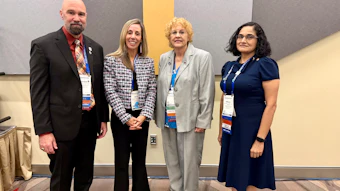
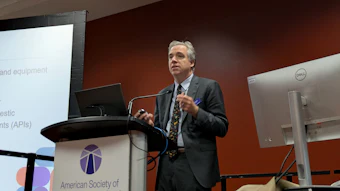
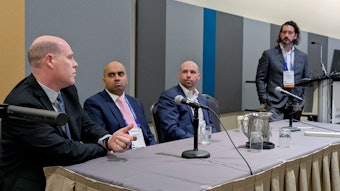
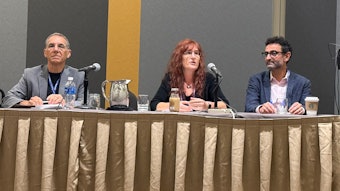
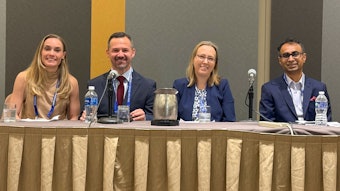
The 2025 session, "Don’t Get Left Behind: Innovations in NORA, Regional, Pediatric, and Ambulatory Anesthesia," featured four experts who reviewed innovative procedures and devices and how they are reshaping the ambulatory anesthesia space.
Panelist Mark Phillips, MD, FASA, Professor in the Department of Anesthesiology and Perioperative Medicine at the University of Alabama at Birmingham, brought attendees up to date on the latest in nonoperating room anesthesia (NORA) procedures, such as peroral endoscopic myotomy (POEM), endoscopic ultrasound-directed transgastric ERCP (EDGE), and interventional pulmonary procedures like pulsed field ablation for atrial fibrillation.
“There are advantages to [pulsed field ablation for atrial fibrillation], which uses brief electrical pulses to create ablation lesions,” he said. “Previously, thermal energy ablation techniques have been used, which can cause a risk of thermal injury and have the potential for causing pulmonary vein stenosis.”
Dr. Phillips said NORA procedures are becoming more complex and longer. In order to keep those procedures moving forward, careful preoperative assessment is essential.
“It is important to have well-equipped anesthesia workstations and appropriately trained and staffed postanesthesia care units,” he said. “The field is continuing to grow every year, and it’s important that anesthesiologists are familiar with these new procedures and the appropriate anesthetic management.”
In addition to NORA procedures, there are new developments in regional anesthesia for ambulatory patients, such as outpatient arthroplasties.
“For upper-extremity surgery, we have moved toward motor-sparing blocks. [For example, there is] the adductor canal block and the differences in analgesia, depending on where you inject,” said session panelist Nadia Hernandez, MD, FASA, Central Clinical Leadership for Orthomed Anesthesia in Dallas. “[There is also] the exciting popliteal plexus block that can serve as a substitute for infiltration between the popliteal artery and capsule of the knee (IPACK).”
For upper-extremity surgery, Dr. Hernandez cited the trend toward phrenic-sparing regional anesthesia, including the superior trunk block for shoulder surgery.
“It is important to know the trajectory of the suprascapular nerve for providing analgesia to shoulder surgery,” she said. “You must also know exactly where the intercostobrachial nerve emerges and how to perform a complete block when certain shoulder surgeries violate the axilla.”
There have been changes to the equipment used in these procedures as well, due to the Non-Opioids Prevent Addiction in the Nation (NOPAIN) Act, which was passed by Congress in 2022. Medicare reimbursements for certain equipment and procedures under the act went into effect in January 2025. Dr. Hernandez said that means perineural infusion pumps are now classified as durable medical equipment by the U.S. Food and Drug Administration, making them more accessible to surgical centers.
“This transition has been beneficial for surgical centers and provides us with more resources, including daily patient follow-up calls from the pump representatives,” she said. “All of these changes make it easier for anesthesiologists to provide this service for ambulatory cases.”
Regardless of which procedure or technology is used, preoperative anxiety can present with many patients, especially those in the pediatric age group. Preoperative anxiety affects up to 60% of pediatric patients, according to panelist Chhaya Patel, MD, SAMBA-F, Associate Professor of Anesthesiology and Pediatrics at Emory University School of Medicine in Atlanta.
Dr. Patel, who is also Medical Director of the Satellite Boulevard Surgery Center at Children’s Healthcare of Atlanta, said technologies such as virtual reality, mobile apps, and digital platforms can help anesthesiologists manage this anxiety in children by giving them something to focus on.
Technology can be a useful tool for both pediatric anesthesiologists as well as for general anesthesiologists who intermittently care for children, Dr. Patel said.
“With the ongoing shortage of pediatric-trained anesthesiologists, more general and community providers will be called upon to manage pediatric patients in the ambulatory setting,” she said. “Equipping all providers with practical, evidence-based strategies will ultimately improve patient care and outcomes.”
Of course, the goal of these treatments is to get the patient home as quickly as possible, but not all ambulatory care patients can make that journey right away. Panelist Kara Barnett, MD, FASA, Director of Anesthesia Services at Memorial Sloan Kettering Cancer Center Monmouth in Middletown, New Jersey, will discuss what’s new in extended recovery facilities that care for sicker patients who may not normally be considered ambulatory surgery patients.
The definition of extended recovery centers varies from state to state due to local laws, according to Dr. Barnett. In most cases, it is simply taking procedures that are normally administered at an inpatient center and putting them in an ambulatory center. Regardless of how they are defined, she said the usage of these centers is on the rise.
“We’re seeing an increase in the volume of ambulatory extended recovery centers and ambulatory surgery centers,” she said. “Sicker patients getting small procedures and generalized patients getting bigger procedures can now all be done at the same place with these ambulatory extended recovery centers.”
Using these types of enhanced recovery centers has its advantages, Dr. Barnett said. One advantage is they fit nicely into the Enhanced Recovery After Surgery (ERAS) model, which is a patient-centered, evidence-based, multidisciplinary pathway tailored to reduce the surgical stress response in patients.
“No matter where they get their procedure done, they are still getting the same type of [ERAS] pathway,” she said.
Whether it is new technology or new procedures, Dr. Patel said it is important for anesthesiologists to enhance the perioperative experience for both patients and their families while creating efficiency in ambulatory surgery centers.
“As stewards of our patients in a competitive health care environment, it is essential for ambulatory anesthesiologists to adopt cost-efficient strategies that minimize anxiety while avoiding the delays in discharge often associated with pharmacologic premedication,” she said.