ANESTHESIOLOGY Daily News
  • Meeting Info
  • Sessions
  • Claim CME
ANESTHESIOLOGY Daily News
Day
Friday
Saturday
Sunday
Monday
Tuesday
Topics
Ambulatory Anesthesia
Cardiac Anesthesia
Fundamentals of Anesthesiology
Geriatric Anesthesia
Neuroanesthesia
Obstetric Anesthesia
Pain Medicine
Pediatric Anesthesia
Perioperative Medicine
Physician Well-Being & Burnout
Professional Issues
Regional Anesthesia & Acute Pain
Safety & Quality
Technology
Workforce Shortages
Archive
2025
2024
2023
2022
2021
2015-2020
Resources
  • Meeting Info
  • Sessions
  • Claim CME
Topics
  • Ambulatory Anesthesia
  • Cardiac Anesthesia
  • Fundamentals of Anesthesiology
  • Geriatric Anesthesia
  • Neuroanesthesia
  • Obstetric Anesthesia
  • Pain Medicine
  • Pediatric Anesthesia
  • Perioperative Medicine
  • Physician Well-Being & Burnout
  • Professional Issues
  • Regional Anesthesia & Acute Pain
  • Safety & Quality
  • Technology
  • Workforce Shortages
By Day
  • Friday
  • Saturday
  • Sunday
  • Monday
  • Tuesday
Archive
  • 2025
  • 2024
  • 2023
  • 2022
  • 2021
  • 2015-2020
Facebook iconTwitter X icon LinkedIn iconInstagram iconBluesky
Oct 14th, 2025

Severinghaus Lecture: Whose fault is it?

Mistakes can be costly in the OR, but when the subconscious mind is in charge, those mistakes may happen without you realizing it.
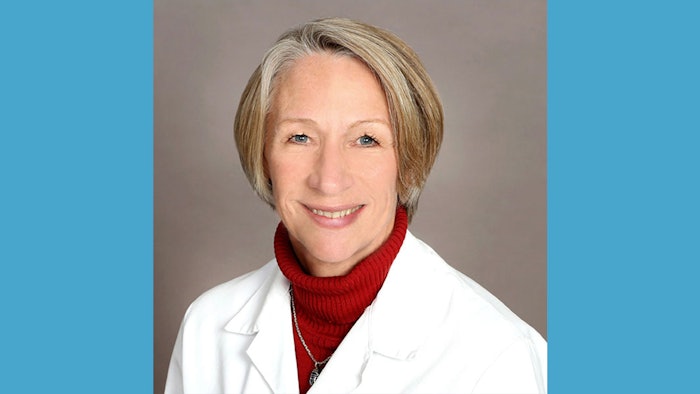

Joyce Wahr, MD, FAHA

Everyone makes mistakes. But many of those mistakes happen when your subconscious is in the driver’s seat. Your brain is on autopilot, doing a task you’ve done a thousand times before, when you suddenly realize that something has gone horribly wrong.

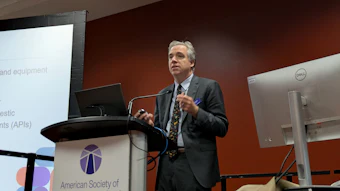
In 2025's John W. Severinghaus Lecture, "It’s Not Your Fault! The Cognitive Basis of Error," Joyce Wahr, MD, FAHA, Professor Emeritus in the Department of Anesthesiology at the University of Minnesota, explored why those mistakes happen and what anesthesiologists can do to prevent them.

Many errors have a root in our unconscious cognitive processes, she said.  

“Scientists have long known that subconscious processes can lead to errors. In 1890, [English psychologist James] Scully wrote a book called 'Illusions,' about things our subconscious makes up that we are sure we saw but that really weren’t there,” Dr. Wahr said. “A lot of our errors grow out of the fact that we live 90% of the time with our subconscious driving how we do tasks.”

Everything we perceive comes to our conscious mind through the filter of stored prior images or mental models of similar events, she said.

“Everyone has seen examples of optical illusions, but the illusion is actually the subconscious subtly altering what we think we saw rather than what is actually there,” she said.

One example of how this could cause problems in a medical setting is a vial of tranexamic acid being mistaken for bupivacaine, with TXA being injected through the spinal needle. Dr. Wahr said the question is, how could this happen?

“They are doing a spinal, and the subconscious expects to see bupivacaine on the vial. So, when they look at the tranexamic acid vial, which looks very much like the bupivacaine vial, the subconscious reports that what’s on the vial [label] is bupivacaine,” she explained. “The subconscious is that powerful in spinning, altering, and subtly changing what is actually there to fit our mental models.”

This unconscious thinking, according to Dr. Wahr, is compounded by the stress and time pressure of working in a hospital, and in the OR, in particular. Emotional stress requires energy and thus leaves less energy for the conscious oversight required to avoid errors. She said this can be especially difficult in a tense environment such as an OR.

“[Hospital] leadership thinks that if we brought our conscious reasoning, our slow thinking, to drawing up medications, we would be able to avoid those subconscious errors, but there isn’t enough energy to do that all day long,” she said. “Trying harder simply is not possible.”

There are interventions that can be employed to stop unconscious errors. For instance, in the example of the vial swaps, Dr. Wahr suggested those medications intended for IV administration be provided in a mini bag rather than in a vial.

The problem, she said, is convincing hospital leadership that these types of methods are both necessary and affordable.

“When I have suggested these to pharmacy leaders or to hospital leadership, they said, ‘We can’t afford it.’ And that’s where I say it’s our fault. By choosing to not implement interventions that we know improve safety and save lives, at that point it does become our fault,” she said.

Whatever the intervention, Dr. Wahr encourages anesthesiologists to find where the vulnerabilities lie and make changes that will block errors arising from subconscious thinking and keep them from reaching the patient.

“We have to be thinking in the subconscious, and we don’t want to be consciously watching ourselves. There’s not enough energy for that,” she said. “We need to look for the things that allow us to use the subconscious incredibly well but also put these safeguards around us so that if we do make one of these errors, it doesn’t harm a patient.”

 

SPE09 | John W. Severinghaus Lecture: It’s Not Your Fault! The Cognitive Basis of Error

8-9 a.m. | Tuesday, October 14, 2025

Stars at Night Ballroom, Ballroom Level


From The ASA Monitor
Congratulations to 2025 Excellence in Research and Presidential Scholar Award Winners
FAER-Helrich Research Lecture: Dr. Ken Solt
Controlled Substances in the OR: QMDA Survey Results
ASA CPMed Sharing Plans and Priorities
ASA Monitor+: Reducing 30-day Postoperative Morbidity and Mortality
Insights from ASA's Chief Advocacy Officer
More Content
From left to right: Steven Butz, MD, FASA, Elizabeth Duggan, MD, MA, Mary Ann Vann, MD, FASA, and Niraja Rajan, MBBS, FASA
ANES25
Searching for the sweet spot in managing diabetics during surgery
Oct 14th, 2025
Sachin Kheterpal, MD, MBA
ANES25
Rovenstine Lecture: Harnessing data to improve quality of care
Oct 14th, 2025
Matt Popovich, PhD
ANES25
Heading off drug shortage disasters
Oct 14th, 2025
From left to right: Nadia Hernandez, MD, FASA, Chhaya Patel, MD, SAMBA-F, Mark Phillips, MD, FASA, and Kara Barnett, MD, FASA
ANES25
All the way home
Oct 14th, 2025
From left to right: Oren Bernstein, MD, FASA, Amanda Arnzen, MD, Mark Cheney, MD, Christine Doyle, MD, MBI, FASA, and Cindy Ku, MD, FASA
ANES25
To transport or not to transport?
Oct 14th, 2025
From left to right: Allen Dennis, MD, MS, Sudheer Potru, DO, FASA, FASAM, Curtis Bone, MD, MHS, and Christopher Yopp, MD, MPH
ANES25
Supporting patients with substance use disorder
Oct 13th, 2025
From left to right: William Rosenblatt, MD, Lauren Berkow, MD, FASA, and Michael Aziz, MD
ANES25
A healthy debate on intubation techniques
Oct 13th, 2025
Amy Vinson, MD, FAAP
ANES25
Tackling the well-being crisis
Oct 13th, 2025
From left to right: Lindsey Rutland, MD, FASA, Anthony Fritzler, MD, FASA, Olga Leavitt, MD, and Sagar Mungekar, MD
ANES25
Are you afraid of code dark?
Oct 13th, 2025
From left to right: Kenneth Cummings, MD, MS, FASA, DFPM, David Hepner, MD, MPH, FASA, Obianuju Okocha, MD, and Angela Selzer, MD, FASA, DFPM
ANES25
More than patient prep
Oct 13th, 2025
From left to right: Smitha Arekapudi, MD, SM, MBA, FASA, Jiapeng Huang, MD, PhD, FASE, FASA, and Marc Zemel
ANES25
This idea went to market
Oct 13th, 2025
From left to right: Harmandeep Singh Boparai, MD, Bonnie Milas, MD, Marie Theard, MD, FASA, and Monica Vavilala, MD
ANES25
An ounce of prevention
Oct 13th, 2025
ANESTHESIOLOGY Daily News
© 2026 American Society of Anesthesiologists (ASA)
1061 American Lane | Schaumburg, IL 60173