This idea went to market
Take your invention, technology, or product from concept to reality.

What do videolaryngoscopes, laryngeal mask airway catheters, and bronchial block catheters have in common? They were all developed or codeveloped by anesthesiologists.
If you find yourself with an idea for a technology or product that can enhance a clinical approach like the ones above, the next logical step is to investigate if that product has the legs to be brought to market. If the answer is yes, then you just took a step toward becoming an entrepreneur.
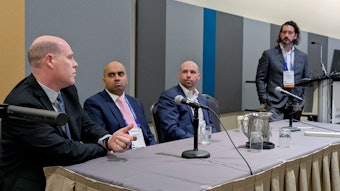
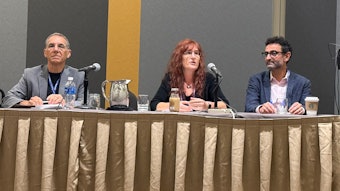
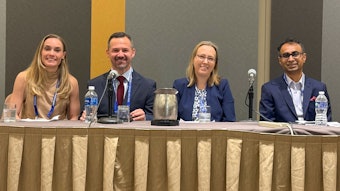
The 2025 session, “From Ideas to Products: Insights and Guidance From the Entrepreneurial Frontlines,” provided attendees a roadmap of the product development process, including prototype development, marketing, financing, and regulatory approval.
Session moderator Smitha Arekapudi, MD, SM, MBA, FASA, an Anesthesiologist with Lakeview Anesthesia Associates in Chicago, points to innovations like the videolaryngoscope as evidence that anesthesiologists are in a prime position to suggest a revolutionary concept.
She predicts the next big innovations will come from medical devices that are supplemented by computer software and artificial intelligence (AI).
“I think anesthesiologists are positioned to be at the forefront of how AI is integrated into our clinical decision-making as well as the when, where, and why of how to put it to use at the point of patient care delivery,” she said.
Whatever the innovation, session presenter Jiapeng Huang, MD, PhD, FASE, FASA, Clinical Professor of Anesthesiology and Perioperative Medicine at the University of Louisville in Kentucky, said there are requisite steps entrepreneurs should take to quickly separate concept wheat from the chaff.
First, you need to identify which of your ideas are feasible and have a high probability of success, Dr. Huang said. Ask questions such as:
- What problem(s) does this product address or solve?
- Does it have widespread merit for your audience?
- Is there any other product like it already in use?
- Is it sellable?
- Does it add value to the area that you are trying to address?
Once you select a promising concept, he said you will need to develop a prototype. It should be a representative product that you either design yourself or a workable product codeveloped with engineers that can be used for demonstration.
Dr. Huang said most common prototypes are either homemade or 3D-printed models of the devices. These are then used to help determine what needs to be upgraded or improved for better functionality in the desired clinical setting.
“You can show your prototype to colleagues or engineers for feedback,” he said. “But it is important to protect your invention by making them sign a nondisclosure agreement.”
Dr. Arekapudi said she generally favors fast prototyping over a more drawn-out process. She pointed to four benefits of this faster approach:
- Speed to insight: You learn what does or doesn’t work faster.
- Fall fast, learn faster: Cheap failures save you from expensive ones later.
- User feedback early: You involve users early, leading to better-fit solutions.
- Reduction in risk: Iteration lets you course-correct before you over-invest.
Dr. Huang agreed, saying that having existing research and clinical evidence for the problem you are trying to solve is useful at the prototype stage. It gives you an idea of existing problems in that area and how other innovations may or may not be addressing them. And finding that research, he explained, isn’t as difficult as it used to be.
“With the help of AI, clinical research can be easily searched to guide prototype development,” he said.
Once you have done this due diligence, the next step is commercialization, which can be a complex process because of regulatory hurdles, the need to build business infrastructure, legal issues, and funding, according to Dr. Arekapudi.
Funding is critical because it enables continued development, testing, and building a team that can help you bring the product to market. Dr. Huang said this is where Small Business Innovation Research (SBIR) grants can help. These grants are distributed by the U.S. Small Business Administration and can provide seed money to develop your product as you work toward commercialization.
“You can apply for these to secure financial support for your project, personnel, and materials,” Dr. Huang said.
He added that there are advantages to using the grant program compared to using your own money or fundraising from colleagues or companies.
“These grants do not demand ownership of the innovation,” he said. “They are nondilutive of your share of the cost of creating the innovation.”
Although SBIR grants can be a great source of nondilutive funding, panelist Marc Zemel, CEO of Retia Medical in White Plains, New York, said it is critical to keep the focus on your main product.
“Make sure [your funding] is moving your main product and application forward,” he said. “If you try to win another grant in a side application, it becomes a dilution of effort and focus.”
One of the final hurdles, Zemel said, is getting regulatory approval for the new product. This often includes supporting clinical trials and working with the U.S. Food and Drug Administration (FDA).
He encourages potential entrepreneurs not to view the government or its protocols as insurmountable obstacles.
“The [FDA] actually wants to help you get your product approved,” he said. “But they have no compunction about sending you back to do more work if they believe it is necessary. In many cases, you will (and should) be more expert in the technology or clinical problem than they are. Teach them what you know, be respectful, and don’t antagonize them.”
Although it is tempting to obsess over the first phase of product development, the other phases require an equal amount of attention, Zemel said.
“Great scientists, clinicians, and engineers have this natural tendency [to obsess over the prototype phase]. What you need to obsess over is how to commercialize it,” he said. “No product sells itself, even with clear, convincing clinical evidence.”
In addition to knowing the steps for developing a product, Zemel said it is essential to remember why you decided to take your product to market in the first place.
“Be crystal clear about why you are starting this journey,” he said. “This road requires a long commitment and a level of personal and professional persistence that is unlike anything else.”
Dr. Huang agreed, saying perseverance is paramount.
“You will likely face many setbacks and failures before achieving success,” he said. “Stay focused on your goals and be prepared to invest significant time and effort. Resilience and persistence are key.”
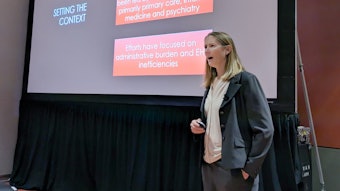
This session also featured a presentation from Barrett Larson, MD, Clinical Assistant Professor in the Department of Anesthesiology, Perioperative and Pain Medicine at Stanford University School of Medicine in Palo Alto, California. Dr. Larson discussed “Incubators, Innovations, and Entrepreneurship in an Academic Setting.”