Innovative staffing solutions offer hope amid workforce challenges
Flexibility is key to weathering shifting trends.

As staffing shortages and personnel instability continue to plague anesthesiology departments nationwide, anesthesiologists from both academic and hospital settings are pioneering sustainable staffing strategies that could reshape the future of perioperative care.
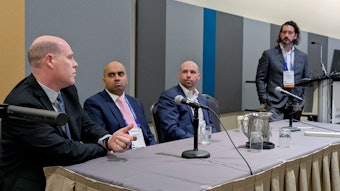
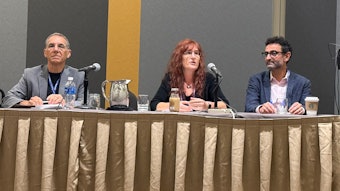
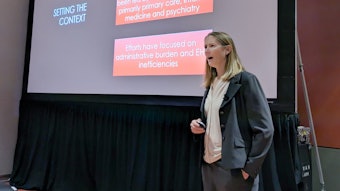
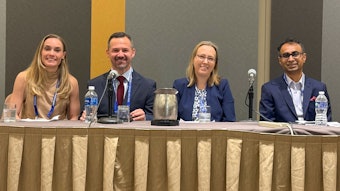
Many departments rely on stopgap measures such as locum tenens staffing or reduced clinical services, while others commit to a culture of flexible hiring, staff preferences, and creative scheduling. The 2025 session, "Tackling the Staffing Crisis: Invaluable Lessons From a Forward-Thinking Health System," explored the challenges ahead and strategies for success.
“Working as an independent contractor/locum physician is commonplace and no longer carries any stigma,” said Zachary Deutch, MD, FASA, an Anesthesiologist with U.S. Anesthesia Partners in Palm Coast, Florida, and the session’s moderator. “In anesthesiology, the main problem I see, aside from the obvious dearth of personnel, is lack of cohesion in practice groups. There is so much coming and going (mostly due to the high compensation available for abundant 1099 work) that the workplace seems quite transient. The days of working with a known, consistent group of peers are almost a thing of the past.”
Today, Dr. Deutch said, the motivations and priorities of a specific practice are often disparate, reflecting the various individuals who may drift in and out. Staffing issues are not necessarily unique compared to other specialties, he said. This inconsistency, experts argue, can undermine both operational efficiency and effective patient care.
“I mean no disrespect to physicians who have chosen the locum path. This can be an excellent career move, which also increases professional longevity. But I do see lack of consistency within a practice as negative,” he said. “It is undesirable when peers and co-workers are not necessarily on the same page.”
There are other specialties that have similar pressures for increased levels of service and acuity, but most are not as immediate in terms of needs, according to session panelist William Roberts, MD, PhD, Associate Professor of Clinical Anesthesiology and Perioperative Medicine at the University of Rochester Medical Center (URMC) in New York.
“Anesthesia is 24/7, 365 in most settings by necessity, especially in rural settings in which patients usually have no alternative sites to draw services from, most especially emergency and obstetric services,” Dr. Roberts said.
A portion of the session explored the URMC model, which emphasizes flexible hiring, staff preferences, and creative scheduling. Panelist Michael Eaton, MD, FASA, is Chair Emeritus and Professor of Anesthesiology at URMC. Drs. Eaton and Roberts shared URMC’s hiring approach for their level one trauma center and its multiple affiliated community sites.
“Demand for anesthesia services continues to grow for two main reasons. One is the aging of the baby boomer generation, as the elderly require more surgical and procedural care. The second is the increasing complexity of procedural services and the long list of comorbidities that patients present with,” said Dr. Eaton. “This makes proceduralists outside the OR reluctant to be responsible for nurse-administered sedation. The imbalance between supply and demand has driven up costs considerably, and many providers have decided to control their work lives by quitting regular jobs and becoming itinerant workers through locum tenens companies. These companies further add to costs with a markup over the already astronomical provider cost.”
Dr. Roberts called the medical center’s approach “courageous” and an ongoing journey.
“Although we can claim success in some areas, there is a great deal left to accomplish,” Dr. Roberts said. “The very first step, however, is the one that feels like jumping off the dock into a cold-water lake. That is immediate and shocking, and it takes a while to get your breath back after you decide to jump in and staff in a new way.”
Dr. Roberts said if leaders cannot think and act like the locum agency, they will forever be dependent on the agencies. They cannot compete with agencies for the provider’s attention unless the platform of options for the provider is essentially the same as what they can get from an agency. Instead, he said it’s important for employers to be flexible and listen to what people tell you they are looking for in their lives.
“This is the third ‘crisis’ in anesthesia staffing that I have witnessed in my career, and I can already feel it beginning to fade,” Dr. Roberts said. “Being discouraged does not solve the problems. Being creative does.”
Dr. Eaton was Chair of URMC’s anesthesiology department for 13 years, stepping down in October 2024. The first few years, he said he had to tell some graduating residents that he didn’t have a job for them. In fact, he didn’t hire CRNAs for three years, he said. This was a result of stagnant surgical volume and the fact that his department’s out-of-OR commitments were a fraction of what they are today. Today, he said, demand has grown, and relying on locums staffing is an expensive alternative.
“When I started, we employed about 65 anesthesiologists to provide services at two hospitals and one ambulatory surgery center. Now, we employ over 120 anesthesiologists, plus many locums, and provide care at six hospitals and four ASCs,” Dr. Eaton said. “Our non-OR volume has increased even more than OR volumes. This is not unique to Rochester but has resulted in a ballooning dependence on expensive locums contracts with unsustainable costs.”
Although Dr. Deutch doesn’t work for URMC, he applauded its model, calling it “groundbreaking and on the leading edge of anesthesia workforce evolution,” based on its hiring philosophy and processes. Noting its flexible jobs, he said the model is “translatable to the private sector as well as to academics.” He noted other successful approaches as well.
“I work for a national practice with a sizable footprint in our state, which has been able to leverage its economy of scale to cover clinical and staffing needs. Physicians from a large, established contract/practice group that is located over an hour away come to our smaller, newer community practice to help cover daywork and call,” Dr. Deutch said. “Our group should have 10 full-time equivalents but only has 3.75 at present. Yet, with the help provided by these people (and locums), we have been able to meet all obligations.”
The session encouraged attendees to think beyond traditional staffing models. Instead of trying to fill every anesthetizing location regardless of feasibility, some facilities are now aligning perioperative operations with available anesthesia resources. This means planning surgical schedules based on realistic staffing levels and reducing unpredictability, and hopefully cost as well.
Each of the panelists agreed that outside-the-box thinking is essential in navigating shifting trends in the anesthesiology workforce. They encourage clinicians to view the perioperative staffing problem in a logical, global context and not as an all-out effort to “scrape up” needed anesthesia professionals, Dr. Deutch said. For example, he said he knows of numerous facilities in the country that have conformed their perioperative operations to the available staffing of the anesthesiology department. Instead of expending time and expense to staff an arbitrary number of anesthetizing locations, he said the facility and the anesthesia practice must “game-plan together” their perioperative allocations (e.g., how many first starts can be accomplished) on a daily, weekly, or monthly basis.
“To me, this approach makes the most sense in terms of providing consistent procedural care without unpredictability, extreme expense, or a revolving door of physicians,” Dr. Deutch said. “Of course, a facility and/or C-suite must be flexible in its thinking, meaning not rigidly insistent on running a particular number of sites, and generally having fair, realistic expectations.”
Ultimately, workforce instability in anesthesiology will require innovative solutions, collaborative coverage models, and operational flexibility, Dr. Eaton said.
“Fundamentally, you have to discard traditional ideas about physician employment and match what anesthesiologists and CRNAs want to what your ORs and procedural areas need,” Dr. Eaton said. “Flexibility rules. New hires want more control over their work, more work-life balance. If you don’t provide that, you are going to be employing more locums with very high costs. Locums providers have the control they want intrinsic in their status.”