Perioperative sepsis: The silent threat in surgical care
Sepsis-3 guidelines provide important updates and garner controversies.

When sepsis sneaks in, time is of the essence. The life-threatening infection remains a significant challenge before, during, and after a trip to the OR, and anesthesiologists are uniquely positioned to detect and treat it.
Despite advances in medical guidelines and awareness, sepsis continues to be underdiagnosed in surgical settings, contributing to increased morbidity and mortality rates.
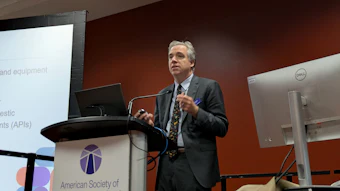
“Although there is a shortage of data on outcomes of perioperative sepsis in general, there is an abundance of data (and publications) to support [the idea] that delays in both diagnosis and treatment of sepsis and septic shock are associated with increased mortality,” said Robert F. Groff, MD, Associate Professor of Anesthesiology at Emory University School of Medicine in Atlanta. Dr. Groff was the moderator of the 2025 session, “Perioperative Sepsis: The Anesthesiologist as the First Intensivist.”
Dr. Groff noted one study of patients with sepsis in the emergency department demonstrating that one-year mortality increased 10% for each hour of delayed treatment (Peltan et al., Chest, 2019). This is particularly concerning for patients who require surgery for source control, as their outcomes hinge on decisions made during the perioperative phase, he added.
In discussing the pivotal role anesthesiologists play in the perioperative diagnosis and treatment of the infection, session panelists addressed updates from the 2021 Surviving Sepsis Campaign, which represents an international change to the definition of sepsis, now classified as Sepsis-3. Speakers included Alisha Sachdev, MD, FASA, an Associate Professor of Anesthesiology at Rush University Medical College in Chicago, and Beverly Chang, MD, a Critical Care Anesthesiologist with Medstar Health in Baltimore.
The updated sepsis guidelines center on infection, organ dysfunction, and dysregulated host response. Although the Sepsis-3 update has refined diagnostic criteria, it has also sparked debate over fluid resuscitation strategies, vasopressor use, steroid administration, and antimicrobial management.
“Success and outcomes depend on coordinated and evidence-based care between anesthesiologists, intensivists, and surgeons,” Dr. Groff said. “I believe that an important first step as an anesthesiologist involves maintaining a high index of suspicion for sepsis in appropriate cases to facilitate early diagnosis and treatment.”
Dr. Sachdev agreed and outlined instances that should raise suspicion.
“Anesthesiologists should consider sepsis in any patient who is at risk — bowel perforation, endocarditis, etc.,” Dr. Sachdev said. “With this high suspicion, there should be a low threshold to start broad-spectrum antibiotics and give fluids/vasopressors as needed in the operating room. This may require additional arterial line placement or central line placement to adequately resuscitate a patient.”
Dr. Sachdev summarized the campaign’s improvement performance changes, which include screening and standard operating procedures. There is weak evidence to support how much fluid to give in the first three hours, she said, noting that it used to be 30ml/kg, and monitors/labs to follow to guide resuscitation.
Additionally, Dr. Sachdev noted that there is no strong evidence to support using capillary refill. Antibiotics are now recommended within one hour of identifying septic shock. In patients without shock, the guidelines recommend three hours for rapid investigation or close monitoring if low suspicion exists. Empiric coverage for MRSA and fungal infections is now only recommended with high suspicion. There is also little evidence to support the use of Levophed and vasopressors through peripheral IVs versus a central line. And there is now weak evidence to support the use of steroids in patients who have an ongoing vasopressor requirement (it was formerly recommended against). Finally, the guidelines suggest against using polymyxin B and vitamin C, she said.
“Our goal is to increase awareness of septic shock intraoperatively and to make sure we [as anesthesiologists] are starting all of the early-recognition interventions as soon as possible,” she said.
Dr. Groff said anesthesiologists have learned a great deal about the definition and management of sepsis and septic shock over the 30-plus years since Sepsis-1 was published in 1991. However, some of the updated guidelines have generated debate, including the importance of optimizing antimicrobial selection and the role of steroids in the management of perioperative sepsis.
“Appropriate antimicrobial selection is a cornerstone of therapy in sepsis and septic shock. It is important to select an early regimen that is broad enough to cover all potential sources of infection,” he said. “An initial regimen would be targeted to the expected source of infection and individual patient risk factors. Cultures obtained early in the treatment of sepsis can be used to identify a causative organism and narrow antimicrobial therapy to the most appropriate agents.”
Researchers continue to explore steroids for their role in modulating the inflammatory response in septic patients, although Dr. Groff said it remains controversial. He encourages further research to clarify best practices in this area.
“Ultimately, this session reminded us that perioperative sepsis is common and often not recognized by anesthesiologists in its earliest stages when intervention can have the highest impact,” Dr. Groff said. “Success and outcomes in perioperative sepsis depend on coordinated and evidenced-based care between anesthesiologists, intensivists, and surgeons.”