Neuroscience and anesthesia converge to help unlock the mysteries of consciousness
New research suggests the scope of influence reaches beyond the OR.
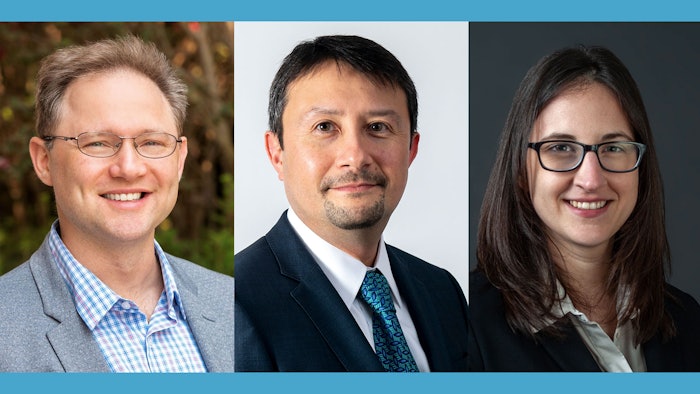
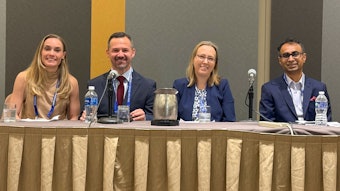
A growing wave of research is reshaping a better understanding of consciousness and the role anesthesia may play in this transformation. In 2025’s “FAER Panel: The Neuroscience of Anesthesia and Consciousness,” leading neuroscientists shared their own groundbreaking insights into the neural circuit mechanisms of anesthetic-induced unconsciousness, cognitive recovery from general anesthesia, and altered states of consciousness.
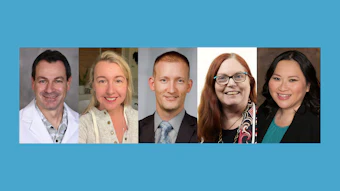
Session moderator Ken Solt, MD, said interest has peaked in recent years, as clinicians advance the search for therapeutics for brain-based disease. Dr. Solt is the Edward Mallinckrodt Jr. Associate Professor of Anesthesia at Harvard Medical School in Boston.
“Until quite recently, consciousness was not considered a viable research direction for neuroscientists,” Dr. Solt said. “However, there has been a growing interest in understanding the underpinnings of consciousness because the scientific and medical communities recognize that this knowledge is fundamental to develop novel treatments for neurologic and psychiatric disorders. Additionally, new experimental techniques have emerged that allow us to explore scientific questions that could not be addressed previously.”
According to Dr. Solt, anesthesia research has played a critical role in this effort because general anesthetics provide the ability to produce altered states of consciousness in a reversible fashion. Investigators with training in both anesthesiology and neuroscience have unique insights and technical expertise that allow them to study the loss and recovery of consciousness safely and rigorously. The knowledge gained from these studies is complementing ongoing work by neurologists, psychiatrists, and neuroscientists to better understand disorders of consciousness, mental health, sleep, and related phenomena such as hibernation. Anesthesiologists are also playing a critical role in exploring and implementing new clinical applications of anesthetic drugs, such as ketamine for the treatment of depression.
Historically, consciousness has been viewed as a philosophical problem rather than a neuroscientific one, according to panelist Alex Proekt, MD, PhD, the Robert Dunning Dripps Professor of Anesthesiology at the University of Pennsylvania Perelman School of Medicine in Philadelphia.
“The only people who did scientific work on consciousness were Nobel Prize winners, such as Francis Crick, Gerald Edelman, Linus Pauling, Roger Penrose, and others,” Dr. Proekt said. “Most people now believe that if we are to make progress on the scientific study of consciousness, we must study the brain. So, over time the problem of consciousness became a proper scientific problem that is seriously investigated by neuroscientists all over the world.”
Previously, much of anesthesia research focused on identifying molecular targets of anesthetic drugs, Dr. Proekt said. Although that research identified several different targets, researchers discovered that anesthetics can also act in several molecular pathways to alter the level of consciousness.
“This, in and of itself, should not be terribly surprising, as anesthetics disrupt the patterns of brain activity observed in the waking brain,” Dr. Proekt said. “In my lab, we are working to understand how dynamics of a multitude of neurons are altered when the brain transitions between levels of consciousness. This line of research is beginning to converge on the fact that neuronal pathways affected by anesthetics overlap with those engaged by natural sleep.”
In exploring the role that anesthesia research has played in the study of neural circuit mechanisms of anesthetic-induced unconsciousness, cognitive recovery from general anesthesia, and altered states of consciousness, Boris Heifets, MD, PhD, said the work has brought attention to the therapeutic potential of altered states of consciousness, especially those induced during emergence from anesthesia. Dr. Heifets is an Associate Professor of Anesthesiology at Stanford University School of Medicine in California and is among the session panelists.
“My lab has used anesthetics both as a tool to study psychedelic therapeutics and as potential therapeutics in their own right,” Dr. Heifets said. “As a tool, control of consciousness with general anesthetics can allow us to figure out whether it's ‘the drug’ or ‘the trip’ that is most responsible for therapeutic benefit. Along the way, we have also discovered that some of the states of consciousness produced by anesthetics — particularly during emergence from anesthesia — may have their own therapeutic properties.”
Additionally, Dr. Heifets’ research has shown that the “set and setting” of surgical procedures can produce powerful placebo effects, and that dream-like states during emergence may help alleviate PTSD symptoms.
“One of the biggest drivers of renewed interest in consciousness, in my view, has been the ‘psychedelic renaissance.’ There is a paradigm shift underway in the treatment of mental health disorders where drugs that produce profound psychoactive effects and experiences are being tested for treating otherwise intractable issues like treatment-resistant depression, severe PTSD, and substance use disorders,” Dr. Heifets said. “Ketamine, a drug many anesthesiologists are very familiar with, is 'first-in-class' for this approach to mental health, in addition to classic psychedelics like LSD and 'magic mushrooms.' There is tremendous interest in repurposing drugs in the anesthetic pharmacopeia for possible applications in mental health.”
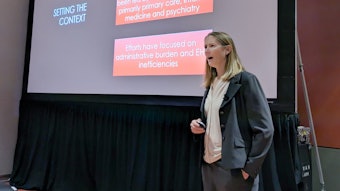
For presenter Kathleen Vincent, PhD, the direction of her research has focused on the later stages of recovery — understanding how the brain transitions from conscious awareness to regaining cognitive function following general anesthesia. Dr. Vincent is an Assistant Professor of Anesthesiology at Harvard Medical School.
“An interesting finding from our work in rodents was learning that conscious and cognitive recovery timelines operate along separate trajectories,” Dr. Vincent said. “An animal that emerges quickly from anesthesia may not recover cognitive function any faster than an animal that takes longer to emerge from anesthesia. The neural underpinnings of this cognitive recovery process, both in healthy and less healthy brains, is my major focus moving forward.”
Dr. Vincent discussed how advanced neuroscience tools like optogenetics and in vivo imaging are enabling precise manipulation of neural pathways.
“These tools allow researchers to precisely manipulate and monitor activity within specific neural pathways and cell types, making it possible to test how they direct transitions between unconscious and conscious states,” she said. “Twenty years ago, this level of experimental control didn’t exist. I think the mechanistic insights from these types of studies will only continue to grow as our neuroscience toolbox continues to expand.”
Collectively, panelists agree that anesthesia does more than flip the switch for consciousness. It also acts as a gateway to understanding — and potentially healing — the brain. Their work is influencing not only ORs but also mental health treatment and neuroscience research worldwide.
“This is an exciting time for research in anesthesiology and neuroscience, as we are beginning to understand the neural circuits and systems that underlie consciousness and how to manipulate them for clinical benefit,” Dr. Solt said. “Our specialty is shaping health care beyond the walls of operating rooms, intensive care units, and pain clinics.”