Mentoring give and take
Striking the balance in mentor/mentee relationships can deliver long-lasting benefits for both.

Having a mentor can be one of the most valuable ways to enhance your career in anesthesiology. However, connecting with the right individual and maintaining a meaningful mentor/mentee relationship can prove challenging.
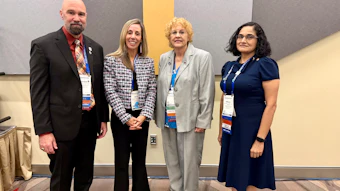
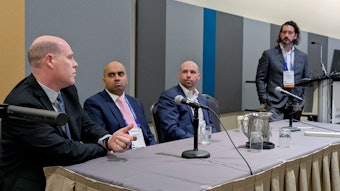
In the 2025 session “Crafting the Perfect Mentoring Relationship: Exploring the ASA Mentoring Program Across All Ages,” an expert panel shared their insights, tips, and strategies for finding a mentor as well as making the most of that relationship once it is established.
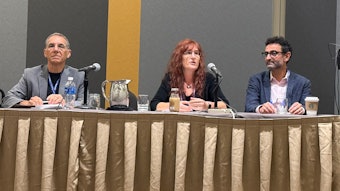
Panelist Andrew Herlich, MD, FAAP, FASA, Professor Emeritus in the Department of Anesthesiology and Perioperative Medicine at the University of Pittsburgh School of Medicine, Pittsburgh, said in order for mentoring to be sustainable, it must prove beneficial for both parties.
He said there is a natural rhythm and back and forth that must take place between the two individuals.
“It’s about listening to them talk about their career and reflecting on my career,” he said. “Where are the parallels? Where are the differences? How can you help them steer their career?”
Lisa Solomon, DO, FASA, Vice Chair of the Department of Anesthesiology at UW Health in Rockford, Illinois, agreed and added that mentoring has evolved in the last few years to what she describes as bidirectional mentorship. Rather than a senior colleague mentoring a junior colleague, it is more of a symbiotic relationship in which two professional colleagues share insights from their own inherent core strengths. For example, a senior colleague might want to explore leveraging social media to impart knowledge and to network, while a junior colleague might want to gain insight into navigating difficult employee and patient conversations.
“The benefit of bidirectional mentorship is to strengthen areas of growth for each individual. From an organizational level, it has the enhanced benefits of improving morale, sparking innovation, transferring institutional knowledge, and supporting career longevity.”
Maintaining the bidirectional nature of mentorship is especially critical for the mentor to understand, said Dr. Herlich.
“The mentor has to be able to listen and make their listening bidirectional," he said. “There’s a fine line between being a mentor and a tormentor. If you overdo it or don’t do it enough, you become a tormentor. You haven’t really completed the task.”
Although mentorship can be valuable throughout your career, it is especially transformative for early-career anesthesiologists. Christine Vo, MD, FASA, Associate Professor of Anesthesiology at Oklahoma University College of Medicine in Oklahoma City, said success starts with setting clear expectations.
“One of the first things that I learned is, effective mentorship depends on explicitly discussing goals, communication preferences, and boundaries,” Dr. Vo said. “Evidence shows that mismatched expectations are a common source of dissatisfaction in mentoring relationships, so establishing this early can make a significant difference.”
Dr. Vo said a strong mentor can go beyond offering traditional guidance and actually become a sponsor, actively advocating for the mentee’s visibility and opportunities.
“For early-career faculty, especially those from underrepresented backgrounds, this can serve as a pivotal factor in career trajectory and retention,” she said.
Lalitha Sundararaman, MD, MBBS, FASA, an anesthesiologist at Brigham and Women’s Hospital in Boston, said expectations on both sides of the mentor/mentee relationship must be clearly expressed to avoid any misunderstandings.
“The mentor may be only thinking of advice or steering the mentee in the right direction, while the mentee may be looking for someone to give them a leg up on the academic ladder or in professional organizations,” she said. “It is prudent to set expectations early so that a fruitful relationship may develop.”
Finally, Dr. Sundararaman encouraged anesthesiologists to consider international mentoring as an option. It can take place both virtually with those on the other side of the world and in-person. For anesthesiologists who have just arrived in the U.S., for example, a mentor’s guidance can prove valuable in dispelling the discomfort and bewilderment inherent in new surroundings.
“Sometimes listening to and seeking advice from someone with a similar background might help them navigate residency and life outside it more smoothly,” she said.