Global clinical trials shaping perioperative care
Featured studies spotlight methodological rigor, important findings, and a range of topics.

The 2025 session “Initial Results: Major Clinical Trials” followed the groundbreaking research of four major clinical trials in anesthesiology.
Andrew Davidson, MD, MBBS, FANZCA, FAHMS, was among the session moderators. Dr. Davidson is a Professor of Pediatrics and Critical Care at the University of Melbourne in Australia. Speaking ahead of the 10th annual session, Dr. Davidson emphasized the importance of large, randomized controlled trials (RCTs) in driving evidence-based practice.
“Big clinical trials can take up to five years to run and cost several million dollars. Yet, they will have an impact on how we deliver perioperative care,” Dr. Davidson said. “The best evidence for the practice of anesthesiology comes from randomized controlled trials. And particularly if they're adequately powered with big enough numbers that they can answer a question definitively.”
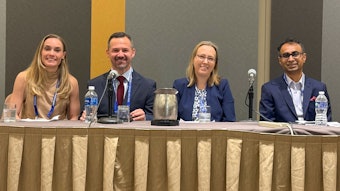
Dr. Davidson shared moderator duties with Jim Rathmell, MD, Professor of Anaesthesia at Harvard Medical School in Boston, and Mark Neuman, MD, MSc, a Professor of Anesthesiology at the University of Pennsylvania Perelman School of Medicine in Philadelphia.
"Intravenous Iron for Treatment of Anemia Before Cardiac Surgery (ITACS)” addresses preoperative anemia in heart surgery patients. This trial assessed whether intravenous iron could improve surgical outcomes. With mixed evidence on its efficacy, the study aims to clarify whether treating iron deficiency anemia pre-surgery truly benefits recovery.
“There's been a push to treat iron deficiency before you have the surgery. But there's a little bit of evidence beginning to appear that it may not actually work,” Dr. Davidson said. “So, this is a trial looking at patients who are having heart surgery to see if you give them intravenous iron preoperatively to treat the anemia, whether they have better outcomes after their heart surgery.”
“Nitrous Oxide for the Treatment of Major Depressive Disorder” explores the psychiatric potential of nitrous oxide (NO2). This study showed promise in treating major depression — a condition notoriously difficult to manage with conventional medications, Dr. Davidson said.
“It’s one of those surprising pharmacological overlaps, where something used in anesthesia might help with mental health. This is one of those odd things where it sort of makes sense pharmacologically. But intuitively, people didn't know if it was a real thing or not, so it was quite important to do some adequately powered large trials to see whether anesthetics can be used to treat people with major depression,” he said. “Doing trials in major depression is difficult because it's quite hard to measure how depressed someone is. So, this study looks at nitrous oxide to see whether it has an impact on major depression.”
“Efficacy and Safety of Inhaled Isoflurane Delivered Via the Sedaconda ACD-S Compared to Intravenous Propofol for Sedation of Mechanically Ventilated Intensive Care Unit Adult Patients (INSPiRE-ICU2) (INSPiRE-ICU2)” investigates the use of inhaled anesthetic gas, specifically isoflurane, for sedation in mechanically ventilated ICU patients. Because I.V. sedation often leads to tolerance and side effects, this novel approach could offer a safer, more effective alternative, Dr. Davidson said.
“This is once again an interesting study where an anesthetic is being used in a setting where it's not normally used. Providing adequate sedation in intensive care patients is an ongoing issue due to tolerance or withdrawal side effects,” he said. “What they're doing here is using an anesthetic gas for sedation to see if it can provide better sedation for patients who are on mechanical ventilators in intensive care compared to the standard I.V. drugs that are used. It's novel, but people have been talking about doing this for years, and there have only been smaller studies.”
“Reduction of Chronic Postsurgical Pain With Ketamine — ROCKet Trial.” The study, registered with the Australian New Zealand Clinical Trials Registry, examines ketamine’s role in preventing chronic pain after major surgery. Although ketamine is known for its analgesic and anesthetic properties, its long-term benefits in managing postsurgical pain remain in question, Dr. Davidson said.
“There's a belief that many patients who have major surgery go on to develop chronic postsurgical pain,” he said. “In this study, patients are given an infusion of ketamine after surgery and followed to determine the incidence of chronic postsurgical pain. It's an important trial.”
Dr. Davidson said not all trials demonstrate that one therapy is better than another, but if they are big enough, they can show there is no difference between options. This is still just as useful, as it means clinicians can discard risky or expensive therapies and use less expensive or safer options, he said.
“Knowing that two options are equivalent helps clinicians choose based on cost, side effects, or availability,” he explained.
According to Dr. Neuman, the goal of the session was to feature the most important and impactful new science coming out of the specialty. The 2025 selection featured trials that “have the methodological rigor, anticipated importance of their findings for practice, and cover a range of topics.”