Getting ready for retirement
Managing the end of your career is more than making sure you have enough money – it’s about making sure you manage your expectations as well.
You may have an idea of what you think your retirement will look like – long walks on the beach, reading, spending time with grandkids. But the reality is often different than the fantasy, and getting there can be a road filled with pitfalls and challenges.
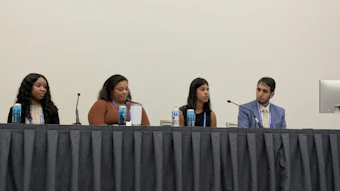
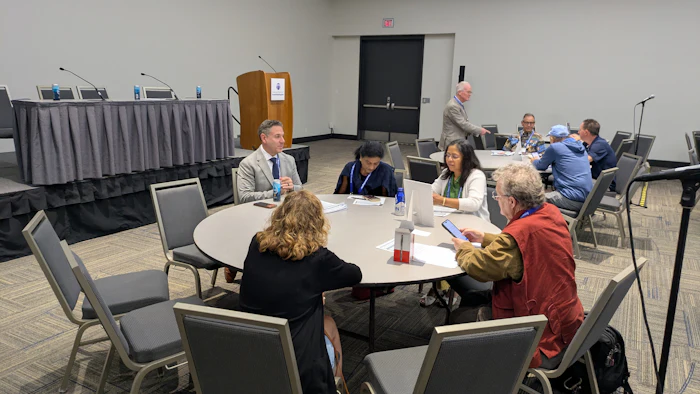
Saturday’s session, “Retirement: Clouds and Silver Linings,” sought to address some of those challenges and provide a little direction for those who are either on the road to retirement or trying to find the on ramp.
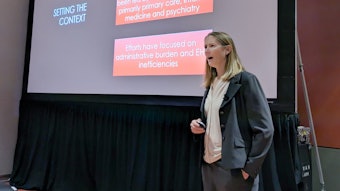
“We know that retirement is a big life change, and it produces stress and anxiety,” said session moderator Rita Patel, MD, herself a retired anesthesiologist who serves as Chair of the Subcommittee on Education and Outreach for the ASA Committee on Late Career and Retired Members. “You’re moving into an uncomfortable and sometimes unfamiliar realm.”
Dr. Patel said some of the common challenges faced by those nearing retirement include the loss of identity that can come with moving out of the workforce and the financial challenges associated with a change in income. One of the keys to being happy in retirement is to manage your expectations.
“These problems are common, but the solutions are not,” she said. “Happiness equals reality minus expectations. You are the expert on your own life.”
Retirement doesn’t happen all at once. Dr. Patel, who also serves as an accredited financial advisor, said there are six phases to retirement. They are:
- Pre-retirement: This initial step is characterized by anticipation and planning. It can include disengagement from your job, making the decision to retire, and planning for your future.
- Honeymoon: This is the initial period of retirement, often marked by excitement and a sense of freedom.
- Disenchantment: A phase involving disappointment and feelings of unmet expectations due to a loss of purpose or identity that came with your job. It can sometimes result in what Dr. Patel called the “three Ds and two Fs”: decline, divorce, and depression, and fearing the future.
- Reorientation: The period of adjustment to your new reality, which typically involves resetting your goals and developing a new sense of purpose.
- Stability: This happens when individuals find a new routine and a new sense of direction in their post-work life.
- Dependence: This final phase involves moving from independent to dependent living. Dr. Patel said it is technically the end of retirement.
According to an informal poll conducted by Dr. Patel during the session, most of those in attendance were in the pre-retirement phase.
“There are two major stresses that happen during the pre-retirement phase,” Dr. Patel said. “The first is that you’re preparing for retirement while you’re working. The second is that you’re not quite sure what your goals and expectations are.”
Session panelist Gary Schwartz, MD, FASA, said he is squarely in the pre-retirement phase and has found himself faced with considering two big challenges: finding ways to spend time with his family and personal health. He said that means realizing that his kids will need some financial help as they get started on their own careers at the same time he’s reaching the end of his. The other factor is personal health, as he has had to change his diet due to some health issues.
“I have to look at what I can do now so I can prevent future health problems and function in my 60s and 70s to continue on a spiritual and physical level,” said Dr. Schwartz, who is Codirector of AABP Pain Medicine and Wellness, and Vice Chair of Pain Medicine at Maimonides Medical Center in New York City. “I meditate now, and I work with my wife to figure out where we want to see our family and ourselves in the future.”
Dr. Patel, having been retired for several years, said she has faced her own challenges.
“The first is social – when you are very active at work and then those social interactions stop,” she said. “So many of my friends are still working. Being with my family is one of my goals, but they are also working. The other more tangible thing is that I have health issues.”
Dr. Patel said she has dealt with those problems by using a resource model developed by the City University of Hong Kong. The model divides the challenges that can occur in retirement into three domains: tangible, mental, and social. The tangible challenges include physical and financial health. Mental challenges include cognition, emotional health, and motivation. Social challenges include the quantity and quality of interaction with friends and family.
Once you have identified these challenges, Dr. Patel said the next step is trying to deal with them by using resources you have already developed over the course of your career.
“There’s life experience and hard lessons that you learn from mistakes – and that’s actually an advantage that we have as we move into retirement,” she said. “There’s this concept of self-concordance, which is being comfortable in your own skin. And in motivational psychology, this refers to goals that are fundamentally aligned with your own core values and interests, rather than seeking approval from others.”
In addition to paying attention to her doctors as far as her health is concerned, Dr. Patel also closely monitors her social and financial well-being.
“I keep in contact with friends and family. I engage in social activities,” she said. “I spend money that’s aligned with the values of family and making a difference and giving back.”
The session’s other panelist, Mark Singleton, MD, FASA, Clinical Professor of Anesthesiology, Perioperative and Pain Medicine at Stanford Medicine, said that understanding yourself and knowing what you can and can’t do are keys to success in retirement.
“I think it is important for us to develop a way of understanding our ability to be resilient and to harness that ability and be mindful,” he said.
Dr. Singleton said that mindfulness can be as simple as thinking about your life and what you are doing in the present moment.
“How can I make today a really good day?” he asked. “And I try to start out every day that way – thinking about what it is that I need to do today and what can be put off until tomorrow. And if you develop that kind of practice, it can be helpful in not expecting things and trying to manage those disappointments in life by looking for the opportunities. Especially when what you thought was a disappointment really turned out to be an opportunity to do something different.”