Anesthetic choices for posterior spinal fusion
Case-based discussion of rare anesthetic crisis serves as the foundation for debate over TIVA.

A rare but potentially fatal complication during a spinal fusion procedure in a 13-year-old patient will serve as the core of a renewed discussion among anesthesiologists about the use of total intravenous anesthesia (TIVA) in complex pediatric spine surgeries.
The case will be featured during the session, “This Spine Is on Fire: Malignant Hyperthermia During a Posterior Spinal Fusion in a 13-Year-Old – An Argument to Completely Avoid Volatile Anesthetics for These Cases.” Presenters will highlight the challenges physicians face when balancing optimal neuromonitoring conditions with patient safety.
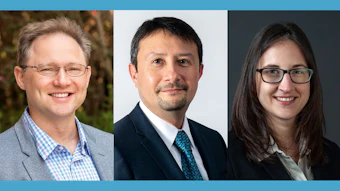
“General anesthesia is the anesthetic of choice for posterior spinal fusion (PSF). Surgeons will frequently utilize intraoperative neuromonitoring, which also plays a large role in anesthetic choice,” said session presenter Timothy Woodin, MD. “Before starting the case, especially in the pediatric world, it’s important to remember the multitude of reasons a patient may need a PSF.” Dr. Woodin is Clinical Fellow for the Department of Anesthesia at Cincinnati Children's Hospital in Ohio.
Those reasons include somatosensory evoked potentials (SSEPs), motor-evoked potentials (MEPs), and electromyography (EMG), as well as tumors and trauma, he said. These types of cases almost always use neuromonitoring, Dr. Woodin indicated, which allows the surgical team to ensure their surgical correction minimizes motor and sensory function as little as possible.
Another consideration is the anesthesia sensitivity of using motor and sensory neuromonitoring. As such, Dr. Woodin explained that anesthesiologists must be certain that their anesthetic of choice minimizes monitoring as little as possible. He also offered a reminder that inhaled anesthetics typically affect monitoring more than TIVA and that using no gas at all typically causes even the smallest amount of interference with monitoring.
“It is more difficult to gauge how sedated a patient is with TIVA, which is why many people are hesitant to use them as the sole anesthetic,” Dr. Woodin said.
Still another consideration is the use of a paralytic during exposure. With minimal interference to nerves, monitoring is less crucial, Dr. Woodin said, making paralytics a prime choice. However, he cautioned that certain disease states (like neuromuscular scoliosis) usually require avoidance of all paralytics.
Some anesthesiologists choose to employ a hybrid approach combining low-dose half minimum alveolar concentration (MAC) with TIVA, according to Joe McSoley, MD, MS, an Associate Professor of Clinical-Affiliate Anesthesiology, also at Cincinnati Children's Hospital. That’s because it ensures that the patient is fully sedated but avoids severe interference with monitoring that gas alone causes, he said.
“Half MAC volatile and TIVA provide balanced anesthesia while limiting the effect of volatile anesthetics on monitoring,” Dr. McSoley said. “Complete TIVA generally provides the best conditions for MEP/SSEP monitoring and avoids volatile exposure. A neuromuscular blockade can be used for intubation and surgical exposure but should generally be discontinued or minimized once reliable MEP/EMG monitoring is required.”
Although this strategy can help ensure adequate anesthesia and provide more predictable wake-up times, Dr. McSoley said volatile anesthetics remain known triggers for malignant hyperthermia (MH), a rare inherited disorder of skeletal muscle calcium regulation.
According to Drs. McSoley and Woodin, MH most commonly involves abnormalities in the RYR1 receptor and can be triggered by exposure to volatile anesthetics or the muscle relaxant succinylcholine. The resulting cascade, he said, can cause uncontrolled calcium release within muscle cells, leading to hypermetabolism, acidosis, hyperkalemia, muscle breakdown, and, if untreated, death.
“It becomes a more complicated situation with patients who have never had an anesthetic, and family history is unremarkable,” Dr. Woodin said. “This is even more complex when you look at pediatric surgery, where inhaled anesthetics are typically used for induction due to most kids not wanting an I.V. while they are awake.”
Keeping that complexity in mind, Dr. McSoley said there are pros and cons of switching to a volatile anesthetic prior to emergence.
“Potential advantages include a rapid and predictable offset and potentially less residual propofol effect,” Dr. McSoley said. “However, in a patient with possible MH susceptibility, this benefit must be weighed against the potentially catastrophic risk of introducing a known MH trigger, making continued nontriggering anesthesia preferable until susceptibility is clarified.”
If the clinical episode raises concern for MH, he said, the patient should be evaluated to determine whether an MH event occurred and whether the patient is MH susceptible. Evaluation may include genetic testing for RYR1, CACNA1S, and STAC3 and, when appropriate, caffeine-halothane contracture testing.
Although MH remains uncommon, Drs. Woodin and McSoley agree that spinal deformity surgeries continue to grow in complexity and that the case serves as an important reminder that pediatric spine surgery presents unique anesthetic challenges. Complete TIVA offers superior conditions for neuromonitoring and may also eliminate exposure to one of anesthesiology's most feared rare complications.