Supporting patients with substance use disorder
Communication is the key to keeping patients away from bad outcomes.
Talking with a patient who potentially has a substance use disorder or an addiction is not a comfortable conversation, but it is one that most every anesthesiologist will need to have at least once in their careers.
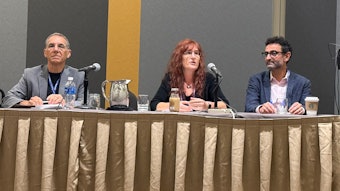
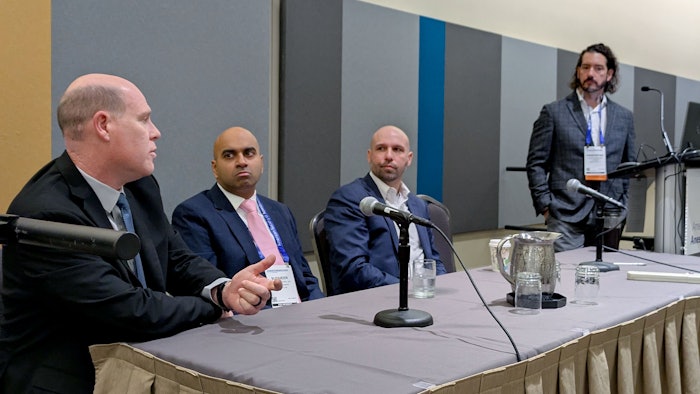
“As pain physicians and anesthesiologists, we are at the front of two colliding public health crises — the devastating impact of chronic pain and the ongoing substance use epidemic,” said Christopher Yopp, MD, MPH, moderator of Sunday’s fireside chat session, “Crucial Conversations and Patient-Centered Approaches to Patients with Substance Use Disorder.”
Dr. Yopp, who is an Assistant Professor of Anesthesiology and Pain Medicine at UT Health in San Antonio, said anesthesiologists often feel torn between the ethical duty to relieve suffering and the need to be good stewards of opioid prescriptions.
“This sphere of difficult conversations with these concerned patients often leads to them being discharged or denied care, creating access issues that we must address,” he said.
Approaching those situations can be tricky.
“We have to start by having a conversation about what is the best thing for them moving forward, because at that point they’ve become psychologically dependent on the medication,” said session panelist Allen Dennis, MD, MS, Legislative Committee Chair of the Texas Pain Society and Partner at Advanced Pain Care of Austin, Texas.
The best way to kick off those difficult talks is to start simply by conversing with the patient, said fellow panelist Curtis Bone, MD, MHS, Assistant Professor of Family Medicine and Addiction Medicine Physician at the Be Well Institute on Substance Use and Related Disorders at UT Health San Antonio.
“It begins with asking permission to get to know them as a person, and normally they say ‘Yes,’” he said. “And I ask them, 'Where’s home? Where are you from?' And then we just start with what they did for fun when they were a kid growing up in [that] place.”
The conversation proceeds along those lines as he traces the patient’s history. From this, he tries to develop an idea of the physiologic and psychological factors that led to joy for the patient.
“Then the question becomes, ‘What brings you joy now? And is there anything that the pain gets in the way of? Is there anything that prevents you from enjoying those parts of your life?’” he said. “The goal is returning to those activities and that joyful state. That frames out both the pain interference that the patient’s experiencing and where our treatment is going.”
Sometimes, the tough conversations can escalate, putting the patient on the defensive, said Sudheer Potru, DO, FASA, FASAM, a board member of the Southern Pain Society and an Anesthesiologist and Pain Management Specialist at the Atlanta VA Medical Center in Georgia. In those instances, the physician needs to be compassionate, but firm.
“Show the patient you are on their side,” he said. “[But] just because you’re on their side doesn’t mean you have to do everything they want you to do.”
An important element of the conversation needs to be communicating the benefits and side effects of the medication they are taking, Dr. Potru said.
“I feel like one of the things we don’t do a great job of in clinical medicine is talking about the risks and benefits of the things that we do,” he said. “We do that calculation in our head, but we don’t necessarily enunciate it to the patient.”
To help a patient accept your recommendations for moving forward, Dr. Potru suggests coming at it from a place of curiosity.
“[Being judgmental] is a mistake almost everybody makes,” he said. “We ask them, ‘When did you start using heroin?’ or something like this. One of the approaches I use is, ‘I see this listed on your chart. Can you tell me a little more about what this means?’”
Tapering patients off opioids is a decision that must be approached with great care, Dr. Dennis said. Make sure the patient understands why you are removing that particular drug and that it could take some time to get off it, especially if they have been taking it for some time, he said.
“You have to be able to tell them, ‘I’m here to help,’” he said. "It’s like landing a plane. You don’t go from 30,000 feet to on the ground in five minutes. You gradually do this, and that’s what we’re going to do. We’re not jumping out of the plane. We’re going to gradually bring this in together.’”